
The 2012 edition of the Standard for Electrical Safety in the Workplace is expected to be issued in August 2011, but it is important for its users to offer proposals now, writes Jeffrey Sargent, NFPA's senior electrical specialist and staff liaison for NFPA 70E.
At a Town Hall meeting held in New York City, Consumer Product Safety Commission Chairman Inez Tenenbaum was joined by parents and consumers to talk toy safety. The discussion centered around new federal safety rules that are in place for toys that will give American consumers greater confidence when they go shopping this holiday season.
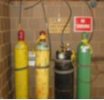
The revised standard updates references for the provisions addressing piping systems, as well as acetylene generators and filling acetylene cylinders and requires that in-plant transfer, handling, storage, and use of acetylene cylinders comply with Compressed Gas Association Pamphlet G-1-2003, titled Acetylene.
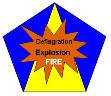
Across the street from the site of OSHA's Dec. 14 meetings in Washington, D.C., John Astad will lead group discussions of OSHA's proposed rulemaking.
The Food and Drug Administration's Center for Food Safety and Applied Nutrition (CFSAN) has released a report from the Institute of Food Technologists (IFT), which recommends clear objectives be set for all users of a simpler, globally accepted food supply chain that can benefit from existing commercial systems.
Ming Yan, who operates a computer store in North Providence, has pleaded guilty to causing the misbranding of the prescription drug sildenafil citrate, which is marketed as Viagra, and to copyright infringement. Immigration and FDA agents seized counterfeit sildenafil citrate pills and more than 1,000 pirated movie DVDs from Yan's store and home in March 2008.
Li Jin Yang and Dong Lin, a wife and husband who had operated five Oriental Forest restaurants in Michigan, were ordered by a federal judge to pay $2,030,430 in minimum wage and overtime pay and damages to 129 workers following an investigation by the Department of Labor's Wage and Hour Division.
OSHA has cited bridge and water tower painter UCL Inc. in Cincinnati with alleged willful, egregious, and serious violations of federal workplace safety and health standards for exposing workers to lead. Proposed fines total $321,000.
Cranesville Aggregate Co., doing business as Scotia Bag Plant, Scotia, N.Y., faces a total of $509,000 in proposed fines from OSHA. The plant, which bags cement and asphalt, has been cited for 33 alleged willful, repeat, and serious violations of workplace safety and health standards following comprehensive OSHA inspections over the past six months.

A seventh crash now under investigation appears to have been caused by the aerodynamic flutter identified by NTSB last spring. Owners of factory-built Zodiac CH-601XLs have been directed to make structural modifications, but owners who built theirs from a kit are not required to make the same changes.
The Department of Labor's Office of Federal Contract Compliance Programs (OFCCP) has announced that DAL Global Services LLC in Denver has agreed to settle findings of hiring discrimination against 110 rejected Asian, black, white, and female job applicants. The agreement resolves the department's allegations that the employer discriminated against applicants for the position of ramp agent at Denver International Airport.
Drea Lynne Gibson, 43, of Fall City, Washington, was sentenced today in U.S. District Court in Seattle to a year and a day in prison and three years of supervised release for product tampering in violation of federal law.
OSHA has cited Loren Cook Co. of Springfield for seven alleged willful and three alleged serious violations after a worker was killed by an ejected machine part on May 13.
The Food and Drug Administration has notified nearly 30 manufacturers of caffeinated alcoholic beverages that it intends to look into the safety and legality of their products.
Chemical Safety Board Chairman John Bresland released a new video safety message on Nov. 12 asking jurisdictions across the country to adopt the ASME Pressure Vessel Code to reduce the number of accidents involving catastrophic pressure vessel failures in process industries.
"This study raises the question: Is there a safe level for BPA exposure, and what is that level? More studies like this, which examine the effect of BPA on humans, are critically needed to help establish prevention strategies and regulatory policies," said lead author De-Kun Li, M.D., Ph.D., of Kaiser Permanente's Division of Research in Oakland, Calif.
The Food and Drug Administration has announced the publication of the new FDA Food Code, a model code and reference document that provides a scientifically sound technical and legal basis for regulating the retail and food service segment of the food industry. The 2009 FDA Food Code is a key component of the President's overall public-health-focused food safety framework for maintaining a safe food supply.
OSHA has proposed $50,600 in fines against Metro Steel Fabricators Inc., a Brooklyn steel erection contractor, for alleged willful and serious violations of safety standards at a Tuckahoe, N.Y., jobsite.
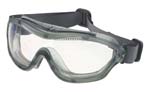
The group, consisting of representatives from 14 major vision protection suppliers, held a kickoff meeting Nov. 9 during the association's Fall Meeting.

If the committee approves him, the OSHA nominee would then have only to await action by the full U.S. Senate. Also, President Obama has nominated a third OSHRC commissioner.