Would an online engineering analysis of fall protection anchor points really work? Who needs it? OH&S Editor, Jerry Laws, asked those questions before seeing a demo of the Anchor Point Evaluation Program from Fall Protection Professionals, Inc.'s Jeffrey B. Reep, P.E., the Green Bay, Wis., company's senior structural engineer and developer of the program. What he demonstrated was the initial release, which evaluates the steel supports of fixed or mobile anchoring systems. Timber and concrete add-on modules are scheduled to be released later this year, Reep said.

Stakeholders are asked to comment by April 20 on the plan, which anticipates an expanded role five years out and beyond.
OSHA began its inspection following a release of steam and heated petroleum coke that occurred the day before while workers were removing refractory brick used for lining furnaces in kiln chambers.
A Dec. 23, 2008, incident in which two employees were injured when they were struck by a 700-pound forging that shot up in the air while they were attempting to free it from a malfunctioning die on a power press led to the second of two agency inspections.
In addition, eight serious violations include management's failure to provide a warning line system around the entire perimeter of the roof, failure to provide a path of access to the hoisting area, improper use of ladders, and lack of employee training.
The broadcast at 10 a.m. Central time is a roundtable discussion in which company representatives will share safety best practices and how they train employees.
With some families operating on tighter budgets this year, Underwriters Laboratories encourages consumers to be cautious when deciding whether to "reuse" or "replace" their spring cleaning tools this season.
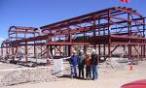
Letters of intent to create the center are due by March 16. NIOSH expects to make one award of up to $5 million per year for five years to support the center, with the intention of making it a national information resource for all construction stakeholders.
Included in the penalty amount is one willful violation for the company's failure to appropriately test gas monitors for hydrogen sulfide and combustible gas in the HVAC systems for the control rooms.
"We would like to ensure all construction companies--big and small--are prepared to effectively control the workplace hazards their employees may encounter," said Nick Walters, OSHA's area director in Peoria.
OSHA standards require an effective form of fall protection whenever employees work at heights of six feet or greater.
OSHA has is inviting employers from Connecticut and southern New England to attend a free March 12 meeting at Wesleyan University in Middletown to learn about the agency's Voluntary Protection Programs (VPP).
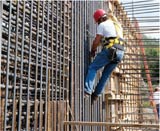
It is a dangerous business to make your living hundreds of feet off the ground. We’ve come a long way from the cavalier attitude so often depicted in the popular prints of the Rockefeller center construction project: the long line of ironworkers having their lunch on a suspended beam high above the ground.
Personal protective equipment is an acceptable and often required tool in many of today's workplaces, but this wasn't always so. The acceptance of PPE traveled down a long and perilous road that was paved with the toil and sacrifice of many workers.
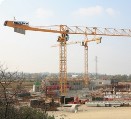
The Associated General Contractors of America is offering Susan Harwood Grant training on Focus Four Hazards in Construction (falls, electrocutions, struck-by's, caught betweens) at 14 locations this year.
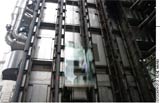
Needless to say, the elevator industry has its ups and downs. On the upside, earnings for those who install, repair, and maintain the systems are among the highest of all construction trades, and the benefits are usually good. On the downside, the work involves heavy equipment with moving parts, often cramped quarters, and sometimes very deep shafts.
In the midst of changes taking place throughout the health care industry, many OHNs are rightly feeling they are in a whole new profession, which helps explain why organizers of this year's annual AAOHN conference have for months now been plugging the event with the tagline "It's a Whole New Symposium."

"The committee decided to develop this standard because of the national emphasis on green energy, recognizing that thousands of these 'green' structures are going to be built and, as such, present challenging safety and health issues," A10 Committee Chair Richard King said. "The purpose of the new standard is to sort out the safety and health issues and provide practical solutions to constructors."
The partners said they will work together to develop and distribute safety and health training materials for warehousing to enable employers and employees to implement and follow best practice standards and guidelines.

Hazards included the lack of a confined space training program for employees whose duties involve entering sauerkraut tanks and numerous instances of moving machine parts not guarded against accidental employee contact.