
When it comes to gas detection, compliance with OSHA standards is a gray area.

One recent study published in the journal of Drug and Alcohol Dependence notes that those in construction jobs are most likely to use pain-relieving drugs. This puts them at high risk for injury and overdose fatality.
Last week, a worker was killed by an elevator after reportedly dropping his phone. An investigation is ongoing.

Episode 1
OH&S recently launched SafetyPod, a podcast aimed at diving deeper into industry-related topics.
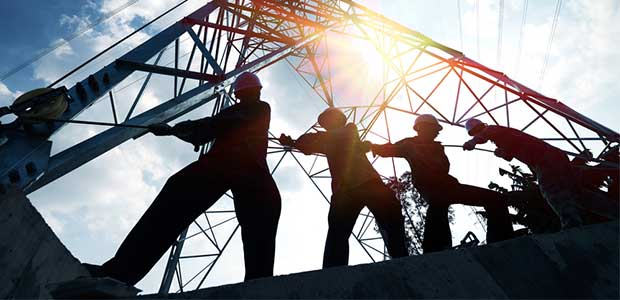
Trends around the country suggest that the construction industry is having increasing trouble finding people to hire and work overtime. Now, companies and projects are suffering because of it.
Monday morning, the rubble of a wall collapsed at a Manhattan site killed one construction worker and injured another.

Building Information Manufacturing (BIM) technology is most commonly used for planning and designing infrastructure, but companies are using it for another area that all construction firms deal with: site safety.
Graham Construction Co. Inc. is facing fines and citations for exposing employees to trenching hazards after inspectors observed employees installing water lines in an unprotected excavation work site.
On September 19, the American Society of Concrete Contractors (ASCC) recognized concrete contractors with exemplary safety records for the previous year.
The Labor Department says that between August 2018 and August 2019, the construction industry saw an increase in jobs, particularly in states like Texas and Florida.
Haskell and Kennesaw State University partnered to develop a virtual reality training aid to reinforce employee safety. Now, employees can train and practice construction safety using simulated programs.
RMS Utilities Inc. from Alamosa, Colorado is facing $92,819 in fines after employees were almost buried in a trench collapse.
Here’s a round of the latest and greatest, debuted at NSC 2019.
For the next Congress & Expo in 2020, the Council is eyeing Indianapolis for the second time in two years.
The National Safety Council is expecting more than 15,000 safety professionals to attend the annual Congress & Expo this month.

New products and systems designed to supplement observations and free up managers to be more efficient.
OSHA cites Midwest Excavating LLC at Sioux Falls jobsite for exposing employees to trench cave-in hazards. Fines are totaling to $58,343 in penalties.

San Diego Convention Center will be the backdrop for this year’s NSC Congress & Expo.

With 166 deaths in confined spaces and 887 deaths from falls in the United States in 2017, drones are becoming a safer way to complete dangerous tasks.
The decision found that New Jersey-based Altor Inc. and its owner were ultimately liable for paying the full penalty amount of $412,000.