Future Proofing Electrical Safety in the Data Center Era
As data center construction booms, discover how connected safety tech and advanced training are mitigating rising electrical risks for the 2026 workforce.
- By Evan Hardin, Evan Jones
- Mar 10, 2026
Electricity will be a key driving factor in the substantial infrastructure investment forecasted for the next several years across the U.S., North America, and the world. As more workers are hired to do electrical-related work and more organizations enter the electrical space, it is important to understand the most common safety trends, hazards, and solutions to ensure workers stay safe on the job.
According to the latest analysis from the Electrical Safety Foundation International, contact with electricity continues to be a leading cause of fatalities and injuries in the workplace, contributing to about 150 deaths each year, and is regularly part of the OSHA top 10 list of most significant injuries. Several of the most electrically dangerous industries are poised for big changes in 2026 and beyond, carrying significant implications for the future of electrical risks in the workplace.
Specifically, increased investment in data center projects and the electrical infrastructure that supports them could bring tens of thousands of new workers to the construction and utilities industries, requiring new worker safety strategies. Also in the near future, emerging workplace safety technologies could play a major role in keeping workers across all industries safe from electrical hazards. This article highlights some of the changes that will shape the narratives around electrical safety in the coming years and covers some of the strategies that organizations can use to adapt to them.
Utilizing Technology to Prevent Electrical Hazards
While numerous existing technologies, like permanently installed safety devices, have saved lives by mitigating electrical incidents, many more incidents could be avoided through the adoption of existing and emerging workplace safety technologies. With the global connected safety technologies market valued at approximately $19 billion per year — with an estimated CAGR of 7% over the next 5 years — safety technologies are poised to become further integrated into the workplace as conditions and safety threats continue to evolve.
One significant change to safety operations at the facilities level is the shift toward connected safety solutions, which rely on fast communication between devices within a broader, ideally cloud-based, safety ecosystem.
Connected safety solutions utilize networked devices to analyze and monitor workplace conditions in real time. These devices, such as sensors, cameras, and wearables, communicate with each other and relay key data to central monitoring systems that can alert personnel to hazards or perform automated actions.
Connected safety systems are similar in many ways to smart home systems that can make adjustments to home temperature, door locks, and lights based on GPS or other feedback. When configured correctly, connected safety solutions can be powerful, dynamic tools that allow human safety managers to quickly access information that they need to keep everybody safe, whether on-site at a facility or performing work off-site.
Within a connected safety system, there are a variety of emerging safety technologies across methods of OSHA’s Hierarchy of Controls that will likely play a more prominent role in the workplace moving forward. At the top of the hierarchy, geolocation devices can help keep workers out of areas where they should not be. Using data from a GPS-enabled device on a worker’s person to alert or even physically deny access to an area with energized parts, for example, can eliminate an electrical threat before an incident can happen.
Because total elimination of electrical risk is not possible in many situations, some safety technologies exist to help workers make more informed decisions when presented with risk. For example, augmented reality (AR) and virtual reality (VR) training are becoming more common — not because these technologies are more fun or futuristic, but because these trainings can be significantly more engaging than alternatives, allowing workers to be immersed in “doing” an action in a safe and controlled environment.
This is an example of an “administrative control,” as it has the potential to change how workers do their jobs, helping workers to react more quickly and confidently to potential hazards because they have already “seen” and “experienced” them in a virtual environment. Another tool that can give workers access to critical information is permanently installed safety devices, which indicate whether a piece of equipment is energized.
Combining various safety technologies under one connected safety umbrella can help move methods further up the hierarchy of controls by automating responses to detected threats. For example, thermal imaging cameras in facilities or attached to drones monitoring outdoor operations can alert workers or safety managers to potential hazards.
This is useful as an “administrative control,” but allowing these cameras to communicate with a central processing system to automatically shut off a piece of equipment in response to dangerous input could make the system operate more as an “engineering control” or even an “elimination” of risk. As workplace safety technology continues to progress, solutions to manage it intelligently and efficiently will also become more sophisticated and widely available.
Data Centers and Construction
The electrical industry is poised for big changes in 2026 and beyond due, in part, to the data center boom, and the associated construction and infrastructure updates will expose new and existing workers to electrical hazards. With an anticipated increase of hundreds of added terawatt-hours of power demand by 2030 for data centers alone, an influx of workers will be needed to expand supporting grid infrastructure across the country, as transmission line projects develop and coal-fired power plants are revitalized.
On the construction side, large data center projects may involve thousands of workers over a period of several years. While OSHA 1926.400 and Subpart K define the scope of electrical safety requirements and rules on the construction site, the construction industry continues to account for the highest number and rate of workplace electrical fatalities, underscoring the need for increased electrical safety awareness in hiring, training, and operations in all areas of the industry.
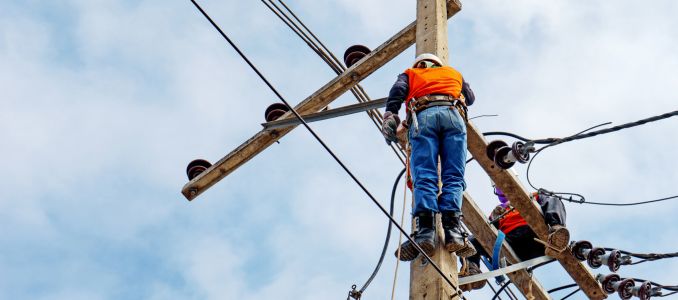
Because overhead power line contact accounts for over half of electrical fatalities involving construction workers, thorough site assessments that consider aerial lifting devices, ladders, and more are vital to ensuring that poles and overhead wires are accounted for. In addition, workers should regularly inspect PPE and tools used for electrical work for damage to ensure that equipment is in good condition and working properly to keep them safe from electrical hazards.
Once a data center is completed, electricity is still one of the top hazards for on-site workers, who are operating in environments that continuously handle large amounts of power, often at higher voltages than data centers built in years past. One of the primary hazards arising from higher-voltage components for workers in data centers is arc faults, which necessitate deliberate policies and procedures surrounding equipment startup and shutdown and panel maintenance.
Similarly, facilities should ensure that they have a thorough surge protection program in place, as unnecessary equipment maintenance can put workers into unexpected contact with energized parts. Finally, in the near future, grid strain and residential electricity rate concerns could spur on-site power generation, such as solar panels, battery storage solutions, and gas-fired power, which would carry further safety implications for on-site workers who install and maintain these systems.
For both data center construction and maintenance, it is crucial that organizations make an effort to hire qualified workers who are properly equipped to perform the job duties asked of them and continuously invest in best-in-class continuing education, high-quality safety equipment, and transparent testing and certification processes, given the unique combination of circumstances in data center operations.
Specifically, the potential influx of workers entering the electrical industry in the coming years, the fact that many on-site data center workers are in IT-focused roles without a background in electrical work, and the prominence of direct-current power distribution all mean that proper electrical safety training is essential.
Conclusion
As businesses adapt to changes in technology, some barriers may slow adoption. Many businesses are uneasy about the implementation costs of safety technology, and workers may raise privacy concerns, wondering if tracking technologies may introduce scrutiny from managers.
Incorporating new safety technologies into a workplace also requires new training, policies, and procedures. Older workers may be reticent about changes that involve unfamiliar technologies, especially since some individuals have been following the same procedures for decades without incident.
Workplace incidents, however, can happen to anyone, and the human and capital costs due to deprioritizing safety can be staggering. As the electrical, manufacturing, and construction industries grow and move to adopt new technologies, it is crucial that workers are properly trained, adequately supported, and given the tools they need to minimize electrical risks on the job.