"The technology should be developed in a way that minimizes potential risks to human health and helps preserve the potential market for the technology," said Jack N. Gerard, president and CEO of the American Chemistry Council.
The U.S. Department of Labor is giving a $250,000 Regional Innovation Grant to help Texas' Upper Rio Grande region address the impact of manufacturing industry layoffs.
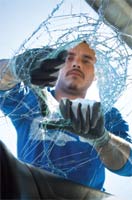
It was interesting and horrifying to watch at the same time: a dedicated worker who, at first glance, was cleaning his work PPE. On closer examination, he had a large bucket of tepid water with a wide range of gloves being dunked and hung up to dry. These gloves had handled raw sewage and were moldy from improper storage after chemicals use or animal blood.
The study, released Tuesday, suggests companions of heart attack survivors should be trained on CPR and summoning emergency medical services.
The cost-benefit analysis says providing water as required could cost employers $5.7 million to $15.8 million per year, with training expected to cost about half as much.
FY 2008 performance status of Federal Executive Branch agencies in meeting the four goals of the Presidential Safety, Health, and Return-to-Employment (SHARE) Initiative is on the tentative agenda.
When performing an inspection at a business, you should inspect its fire extinguishers. Looking at the psi gauge to see whether the arrow is in the green and inspecting the tag to determine whether it is current or the extinguisher needs to be inspected will tell you some things about it, but there is a bit more you should know.
Saying casualty rates "remain unacceptably high," the U.S. Coast Guard published its ANPRM today, calling for more crew safety training and regular stability assessments of vessels as they age.
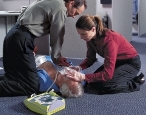
For its part, the American Red Cross says it has set an organizational goal of reaching 250,000 people nationwide during the official week--June 1-7--with the vital knowledge and skills to respond to a life-threatening situation with confidence.
The National Safety Council has been involved with the program since its inception. The program teaches teens and parents alike about safe driving.
OSHA announced in yesterday's Federal Register that it is seeking applications for Susan Harwood Training Grants.
Three CIHs will present a full two-hour program, including a demonstration of quantitative fit testing, for policyholders at the San Bernardino office.
The incident occurred on March 23, 2005, during the startup of the refinery's octane-boosting isomerization unit, when a distillation tower and attached blowdown drum were overfilled with flammable liquid hydrocarbons.
The first of five annual reports to Congress, the Interagency Aerospace Revitalization Taskforce offers strategies for meeting the challenges of the aerospace industry's growing talent demands.
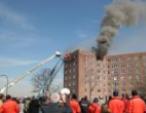
The experiments evaluated the use of positive-pressure ventilation fans, wind control devices, and hose streams to control or suppress deadly heat and smoke from wind-driven flames, as this NIST photo shows.
"The bottom line is this: Low-income children in urban areas need more, long-term intensive efforts," says Kelli A. Komro, the study's lead author.
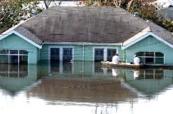
"Each year, more deaths occur due to flooding than from any other thunderstorm-related hazard. Why? The main reason is people underestimate the force and power of water," according to FLASH, a safety coalition.
Gov. Arnold Schwarzenegger's administration recently highlighted a new campaign to recruit apprentices for public works projects funded by bonds that will help California rebuild its infrastructure and keep the economy growing.
An awareness campaign and a series of workshops follow three fatal falls in the state this year.
The revised manual examines critical topics related to operational issues and addresses ways to better protect firefighters and other emergency responders through the use of proper protective clothing and improved tactical procedures.