The Web site serving as ground central for the campaign includes tips on alternatives to handshaking and articles such as "History of the Handshake," "Famous People Who Don't Shake Hands," and "How Many Men Wash Their Hands After Using Toilet."
Besides filling more than 5 million orders for H1N1 vaccine doses, the Department of Public Health has distributed 7.3 million N95s to 27 counties in California.
Rapid influenza diagnostic tests used in doctors' offices, hospitals, and medical laboratories to detect H1N1 are virtually useless and could pose a significant danger to public health, according to a Loyola University Medical Center researcher.

Around 80 million doses of vaccine for this virus have been distributed worldwide. The agency says there have been few reports of adverse reactions, including fewer than 10 suspected cases of Guillain-Barre syndrome in people who have received vaccine.
States are required to notify OSHA whether they intend to adopt policies and procedures identical to today’s Instruction or adopt or maintain different policies and instructions for conducting inspections to minimize high to very high risk occupational exposures to the virus identified as 2009 H1N1 influenza.
Needle. For some people, the word--almost as much as the sight of one sliding into skin--is enough for people to cringe, cry, even swoon if they're standing in line waiting for one.
Vaccinations will be offered for those up to five years old, even if they have no underlying medical condition.
Researchers at the La Jolla Institute for Allergy & Immunology have found that previous influenza infections may provide at least some level of immunity to the H1N1 "swine" flu. "The question we asked was, 'Is the swine flu more like the seasonal flu or like a totally new strain of influenza where there would be no immunity?,'" said Alessandro Sette, Ph.D., an internationally recognized vaccine expert and director of the La Jolla Institute's Center for Infectious Disease. "What we have found is that the swine flu has similarities to the seasonal flu, which appear to provide some level of pre-existing immunity. This suggests that it could make the disease less severe in the general population than originally feared."

"We're beyond theory and onto execution," said CIDRAP Director Michael T. Osterholm, Ph.D., M.P.H. "The pandemic is here. And we need every business to recognize the impact it can have. It's not too late, but time is of the essence."
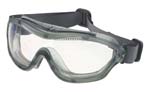
The group, consisting of representatives from 14 major vision protection suppliers, held a kickoff meeting Nov. 9 during the association's Fall Meeting.
OSHA has issued commonsense fact sheets that employers and workers can use to promote safety during the current H1N1 influenza outbreak.

The hottest PPE category this year, respiratory protection, can be challenging to navigate. NIOSH’s site has always been a good information source about these products, and the new Respirator Trusted-Source Information Page is even better.
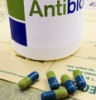
With European Antibiotic Resistance Awareness Day set for Nov. 18 and an EU-US task force announced Nov. 3, there is now a consensus that antibiotic resistance is regarded as a threat to public health, according to the European Centre for Disease Control and Prevention.
Scientists at the University of North Carolina at Chapel Hill School of Medicine and the University of California, San Francisco have developed and experimentally tested a technique to predict new target diseases for existing drugs.
The Food and Drug Administration recently published a guidance document that should help manufacturers develop diagnostic tests for the 2009 H1N1 influenza virus.

With the recent outbreak of H1N1 virus around the globe, there has been increased interest in using respirators to help protect people at work, at home, and while out in public. While most people have seen or used respirators, few people truly appreciate and understand how these apparently simple devices actually work and what is required to use them properly in order to receive the expected protection that they can offer.
"We are pleased that Catholic Healthcare West is joining with us to set the highest possible hospital safeguards for patients and nurses and creating an innovative model that every hospital in America should follow," said Rose Ann DeMoro, CNA/NNOC executive director.
Among the topics covered in the 13-minute production are the differences between typical symptoms and those requiring immediate medical help, and how to take care of sick family members in ways that protect the caregiver.
HHS Secretary Kathleen Sebelius recently announced the award of $17 million to fund projects to fight costly and dangerous health care-associated infections, or HAIs.

The agency said on Thursday that although a dearth of the medicine in some areas is creating "challenging circumstances" across the country, increasingly more doses will be readily available in coming weeks.