The Quiet Power of Prevention
Standing between risk and life, these experts use science and strategy to stop workplace illnesses before they start. Prevention is their success.
- By Bernard Fontaine
- Feb 24, 2026
Being a career Industrial Hygienist or Occupational Health (IH/OH) professional involves a mix of detective work, science, advocacy, and quiet responsibility. It means you spend your days standing in the space between risk and life. Most people never notice the danger. You’re trained to see it immediately and react accordingly.
You walk into a facility, and you don’t just see equipment. You see the workers and their managers as people doing their job based on their knowledge and experience. While you are looking around, you assess the working conditions and some of the pitfalls of the work being done. You assess noise levels, smell airborne contaminants, consider confined-space risks, evaluate ergonomic strain, identify chemical exposure pathways, identify ventilation flaws, understand the level of training provided, and assess behavioral shortcuts.
Your brain is always scanning issues that affect workers, the public, and the environment. Your job is to identify gaps in corporate policies, programs, and procedures that put workers, the public, and the environment at risk.
What It Feels Like Day to Day
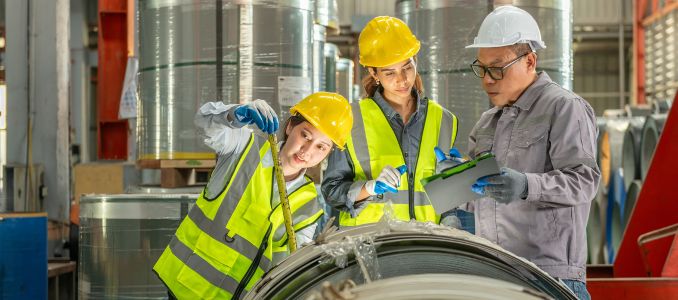
Some days you’re in steel-toe boots and a hard hat, wearing a respirator, climbing ladders with monitoring equipment. Other days, you’re reviewing exposure data, writing reports, or sitting across from executives explaining why a shortcut could cost someone their organs, their hearing, or their life. You carry air-monitoring instruments instead of weapons, sampling pumps, combustible gas detectors, photoionization detectors, and personal noise dosimeters. Senior-level professionals sometimes oversee field staff while presenting objective performance strategies and management briefings. You collect information that tells invisible stories. It can feel like:
- Being the calm voice when something goes wrong
- Being the person to determine if workers are at-risk or just detecting an unpleasant odor
- Being the one who says “stop” when production wants to go faster
- Being the translator between science and operations
- Being the person who notices the early warning signs
- Being the person who evaluates the differences between work practices
- Being the person who understands the health hazard and the work process
- Being the person who understands the mission, vision, and values of the organization
- Being the person who determines if production changes influence exposure
- Being the person who seeks out maintenance and repair workers with the worst exposure
You are often the only one in the room, or in the entire building, thinking about the short- and long-term consequences. Much of the work happens on the shop floor, at a demolition site, or on a mining site. You’re walking through factories, construction sites, hospitals, refineries, and labs.
You learn to notice the small things. A missing glove, the improper use of a respirator, or someone entering into a hazardous environment without any personal protection. Maybe it’s the visible smoke or dust emanating from a machine or an industrial process. A shortcut someone takes to save five minutes may cost them their life or make them sick. A strange but toxic smell that everybody takes for granted often goes unnoticed. Maybe it’s a gap in company policy, program, or procedure. Those details matter.
Then you’re back at your desk:
- Analyzing exposure data and trend analysis
- Comparing sample results to regulatory limits
- Investigating worker complaints
- Reviewing product research or building design plans
- Writing reports based on survey, audit, and inspection findings
- Preparing a briefing with management and union officials
- Crafting a presentation to explain the risks in plain language
- Evaluating industry key performance indicators (KPIs): lagging and leading
You often sit between two worlds: workers who just want to do their jobs, and management focused on budgets, profits, and production. Your job is to make health and safety practical and realistic, not theoretical. When you discover a potential risk and make a change to prevent someone from becoming ill, it can be deeply meaningful. Catching a problem early prevents cancer decades later. Most of the time, you don’t get dramatic “lifesaving” moments. You prevent things that would have happened quietly over the years. That takes patience and long-term thinking.
Responsibility to Workers, Public, and Environment
The responsibility is very real. When you sign off on a health and safety plan, it’s not just paperwork. It means you believe workers will go home safe and healthy because of it. When conducting a survey, inspection, or audit, you want to capture both potential and known health hazards. When you identify a potential risk and take steps to prevent someone from becoming ill, it can be deeply meaningful. It becomes even more real when there is an emergency chemical spill or air release into the neighborhood. This is especially true after a product pipeline rupture or train derailment involving multiple damaged tank cars carrying hazardous materials.
You don’t always get applause, an award, or recognition for your work. In fact, when everything goes right, nothing happens. No injury, short- or long-term illness, or occupational disease. No headline. No lawsuit. Prevention is invisible success. That’s one of the hardest parts. You measure victories in things that did not occur.
Professional Skills and Career Development
Most IH/OH professionals don’t come from just one path in life. But there are clear patterns in education and experience. At the core, this is a science-based profession. Almost everyone starts with a strong technical foundation. Over time, you become:
- Part scientist (chemistry, toxicology, physics)
- Part engineer (controls, ventilation, noise mitigation)
- Part communicator
- Part negotiator
- Part teacher (hazards and risk)
You learn how to explain something like benzene exposure or ergonomic strain without sounding alarmist or minimizing the risk. Most professionals have a bachelor’s and a graduate degree in one of these disciplines:
- Environmental Health
- Industrial Hygiene
- Occupational Health and Safety
- Chemistry
- Biology or Microbiology
- Chemical Engineering
- Environmental Engineering
- Public Health
- Occupational Medicine
- Physics
Chemistry and engineering degrees are common in heavy industry, oil and gas, manufacturing, and mining.
Different IH/OH Career Entry Paths by Industry
| Industry |
Common Background |
| Oil & Gas |
Chemical Engineering, Chemistry |
| Healthcare |
Public Health, Nursing, Environmental Health |
| Mining |
Engineering, Geology, IH |
| Manufacturing |
Safety + Engineering |
| Government |
Public Health, Environmental Science |
| Consulting |
Industrial Hygiene or Environmental Health |
Professional Board Certifications
A Certified Industrial Hygienist (CIH) or Registered Occupational Hygienist (ROH) is a career professional credential. It tells employers and regulators that someone has met high standards in education, experience, and examination in the field of occupational health. In simple terms, it means: This person is qualified to identify, evaluate, and control workplace health hazards.
The CIH credential is granted by the Board for Global EHS Credentialing (BGC), based in the United States. To become or maintain the CIH credential, you must have a science-based degree (often chemistry, biology, engineering, or environmental health), several years of professional industrial hygiene experience, pass a comprehensive exam, agree to follow a professional code of ethics, and maintain continuing education.
The ROH designation is commonly used in countries such as Australia and South Africa. For example, in Australia, it is awarded by the Australian Institute of Occupational Hygienists (AIOH). An ROH has formal training in occupational hygiene, documented field experience, and passed a professional assessment process, met competency standards, and has met ongoing professional development requirements. The title varies slightly by country, but the standard is similar: verified expertise in protecting worker health.
The CIH and ROH titles are not identical, but they are equivalent in professional level. Other countries may use similar professional designations. Approximately 6,800–7,000 active CIHs exist worldwide. This is the most recent and commonly cited range from professional sources. Of these, the United States has the majority, with about 6,225 CIHs historically counted there. About 20,000 occupational hygienists are estimated globally (including certified and non-certified). There’s still a major need for more trained professionals in large emerging economies like India and China.
Estimated CIH and ROH Numbers and Geographic Spread
| Designation |
Approximate Number of Holders |
Primary Countries/Regions |
| CIH |
~6,800 – 7,000 globally |
United States, Canada, China, Singapore, India, Australia, South Korea, Malaysia, Hong Kong, Taiwan, and Saudi Arabia (IOHA) |
| ROH |
~300+ (in Canada) |
Mainly Canada (Occupational Health & Safety Canada) |
|
Source: International Occupational Health Association (IOHA) National Accreditation Recognition Committee Report (2024) and Canadian Occupational Health and Safety article by Richard Quenneville. October 9, 2020. |
Internal and External Frustrations
IHs and OHs will sometimes face:
- Budget resistance to hiring staff or consultants to evaluate hazards or risks
- Failure to seek free advice from loss control surveys and regulatory consultations
- Reductions in the workforce – forcing overtime and fewer personal days off
- Societal, racial, or cultural differences between management and the workforce
- Production pressure to produce more within the same timeframe
- “We’ve always done it this way” culture, and nobody has gotten sick or injured
- Underreporting of occupational hazards or laying off injured or sick workers
- Constantly changing schedules and shifting work locations
- Child labor issues based on geopolitical and socioeconomic circumstances
- Underestimating the need to protect workers, the public, or the environment
- Leadership that sees health and safety as a burdensome cost, not a core value
There are moments when you feel like you're not recognized for your knowledge and expertise, even when you warn about hazards and risks others don’t yet see. You learn persistence. You learn diplomacy. You learn how to present data and information that changes minds and presents viable solutions.
The Meaning of Our Work
But there are moments that stay with you.
- A worker thanks you because their headaches stopped after the ventilation was fixed.
- The risk of a potential or ongoing exposure is recognized based on industry knowledge and experience
- An engineering design or process change reduces the risk of occupational exposure
- An injury and illness rate drops because your training changed the workforce behavior
- Collaboration with other project personnel can prevent a health exposure
- Workers understand the need for engineering or administrative controls during training
- A serious near-miss turns into a learning moment instead of a fatality.
- Proper planning before, during, and after an environmental catastrophe prevents lives lost
You go home knowing your work matters. You are protecting:
- Workers’ families
- Communities near facilities
- The environment downstream
- The company’s future
- The work and people who need you the most
It is a blend of a comprehensive understanding of occupational, public, and environmental health, engineering, administration, psychology, law, economics, finance, social justice, human resources, risk governance, medicine, and ethics, all in one profession.
Short- and Long-Term Career Impact
If you stay in this career long enough, you start to see the ripple effects.
- The organizational health and safety culture grows stronger.
- Trust builds between the stakeholders and shareholders.
- Importance of the hierarchy of engineering over administrative controls
- Students and younger professionals appreciate the magnitude of the responsibilities.
- You influence government and corporate policy, programs, and procedures.
- You help organizations move from reactive to preventive thinking.
- You ensure sustainable productivity and human performance based on relationships.
- You help reduce risk and limit liability from a management change.
- You influence and improve emotional intelligence and support social justice.
- You make it a better place to live and work
And sometimes, years later, you realize that an illness or disease that could have happened simply never did, and the at-risk workers did not suffer through the physiological and psychological pain. That’s the quiet power of this profession.
What It Takes to Become an IH or OH Professional
- Technical competence in the ability to analyze a given situation
- Understanding the industry, processes, and work tasks
- Examining the chemical, biological, ergonomic, radiological, and psychosocial risks
- Balancing the need for engineering or administrative controls
- Emotional resilience in the wake of political and economic strife.
- Integrity and truth above all management decisions
- Courage to speak up when necessary to prevent damage to the business reputation
- Patience to listen to other points of view
- Contribute expertise and recommendations in the project, process, or claim
- Systems thinking to make changes in worker and management decisions
It is not glamorous. It is not always appreciated. But it is deeply consequential work.
Soft Skills Matter More Than People Expect
The science gets you in the door. But long-term success depends on:
- Clear communication
- Understanding the issues
- Negotiation skills
- Power of persuasion when management change is needed
- Comfort speaking to executives, frontline workers, and the public
- Ethical judgment
- Reputation to seek the truth and deliver sustainable solutions
- Practical problem-solving
You often translate complex toxicology principles into plain language and develop a business case that supports change. That’s a learned skill.
Conclusion
If you plan on becoming a career IH/OH professional, here are a few of the challenges:
- Bachelor’s in science or engineering
- Often, a master’s or doctoral degree
- 5–10 years of field experience before board certification
- Experience in manufacturing, consulting, government, or healthcare
- Strong working knowledge of regulations
Many IH/OHs belong to professional organizations such as the American Industrial Hygiene Association (AIHA), Workplace Health Without Borders (WHWB), or other equivalent national and international bodies. This is where everyone collaborates about the profession and their career.
But the bigger picture is that most IH/OH professionals come from diverse academic and professional backgrounds, yet they share a common mission: preventing illness and disease among workers, the public, and the environment before they occur.
This is an exciting opportunity for anyone seeking a real challenge in a dynamic work environment. It is an emerging, diverse profession with mentors who support your studies and collaborate with you throughout your career on complex and intriguing cases. Being an IH/OH professional makes a real difference in the lives of workers, the people living in the communities, and the environment.