The two organizations will collaborate to improve the protection of workers and will encourage students and other professionals to choose occupational safety and health as a career and advance their competency in that field.

The Northeast's multi-species groundfish trawling had the highest fatality rate of all during 2005-2014 at 30 per 10,000 FTEs.
The changes will update training and experience requirements for authorized users, medical physicists, radiation safety officers, and nuclear pharmacists and also will allow associate radiation safety officers to be named on a medical license, among other things.

The Aug. 7–11 training course brought together intelligence officers and investigators from Jordan, Lebanon, Morocco, and Tunisia to enhance identification and detection of potential terrorism subjects.

Staffers from the agency's division of Coal Mine Safety and Health and training specialists from Educational Field and Small Mine Services will visit coal mines to review approved training plans and talk with and observe miners with one year or less experience at the mine and miners with one year or less experience performing their current job.

The NSC Congress & Expo is sure to be a week full of education and innovation in the safety and health market, so be ready to start your engines come September.
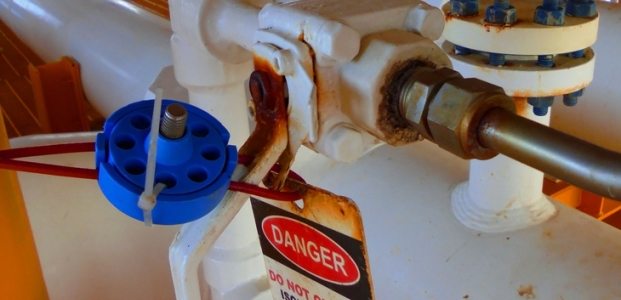
The Z244.1-2016 standard attempts to help employers and safety managers prevent both violations and worker exposures to hazardous energy.

The task force, which Acosta will chair, has been asked to identify strategies and proposals to promote apprenticeships, especially in sectors where apprenticeship programs are currently insufficient.
"Despite its lengthy OSHA history, Aluminum Shapes still does not comply with federal safety and health standards," said Paula Dixon-Roderick, director of OSHA's Marlton Area Office. "These hazards leave workers vulnerable to the risk of serious injury and possible death."
Hundreds of occupational safety and health professionals will be traveling to New Orleans to attend Safety+ at New Orleans' Ernest N. Morial Convention Center. It takes place Aug. 29 through Sept. 1.
"Our young adult participants have a variety of challenges and barriers to sustainable employment, such as a lack of education or homelessness, and this training program will provide them with a much-needed opportunity to learn the basics of workplace health and safety," said Shelley Cadamy, executive director of Workforce Tulsa.
Flooding inside the West Point sewage treatment plant in February caused $57 million in damage and 235 million gallons of untreated wastewater to be dumped from an emergency outfall near Seattle's Discovery Park.
The 49 additional credentials can guide career-based program development and help students prepare for Ohio's in-demand jobs and careers, according to the state Department of Education.
Safe Work Australia reported July 14 that 115 people have lost their lives on quad bikes in Australia since 2011, with almost two-thirds of those deaths occurring on farms.
The money is available as part of the Susan Harwood Training Grants program.
A new campaign will help drivers transition to electronic logging devices.
The organizations will work together on education and safety initiatives in the chemical process industries
The existing Police Academy was built in 1976, the city's fire prevention training facility was constructed in 1950, and the Fire Academy South was developed in 1965.

Employees need to refresh their training and have drills regularly so they will be able to rely on both their knowledge and their experience when emergencies happen.

Time, efficiency, and protection become key factors the right respirator selection can address before a worker is ever faced with an emergency situation.