The pumps covered by this standard, which includes types, nomenclature, and definitions, are typically driven by vertical electric motors or horizontal engines with right angle gears.

The nationwide Step-Up is the culmination of an educational program by Secretary Eric Shinseki's VA to implement stronger procedures and better accountability at VA health care facilities.
After a city fire department reported the site had blocked fire exits and aisles, OSHA began its inspection July 29, 2008.
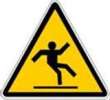
The British campaign to reduce slip-and-fall injuries is focused on seven sectors where they are common: food retail, catering and hospitality, food and drink manufacturing, building and plant maintenance, construction, health care, and education.
Benjamin S. Carson, Sr., MD, author, director of pediatric neurosurgery, and professor of neurosurgery, oncology, plastic surgery, and pediatrics at the Johns Hopkins Medical Institutes, will deliver the keynote address at the 36th Annual Educational Conference and International Meeting of the Association for Professionals in Infection Control and Epidemiology (APIC), on Monday, June 8 at 9:15 a.m. in Fort Lauderdale, Fla. The meeting, which runs from June 7-11, is the largest annual gathering of infection preventionists from around the world.
The California Safety Services Group recently announced its 21st Annual Cal/OSHA Update Seminar Series will commence April 1, 2009. Cal/OSHA Representatives as well as recognized health and safety professionals will review and update significant Cal/OSHA regulation and policy changes, which occurred in 2008 as well as significant rulings of the Cal/OSHA Appeals Board.
The Department of Labor recently announced a $22 million grant to assist approximately 7,400 workers affected by financial industry layoffs in the New York, Connecticut, and New Jersey Tri-State area.
The 126-acre site in Pennsylvania will hold a 300-room hotel, 200,000 square feet of retail space, 3,000 slot machines, a meeting and convention area, and a variety of dining, shopping, and entertainment venues.
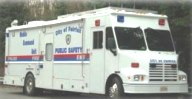
"This free training video is a must-watch for all first responders," says Tim Butters, who chairs IAFC's Hazardous Materials Committee and is assistant chief of the Fairfax, Va., Fire Department. The city's police and fire departments placed this new 30-foot Mobile Communications/Command Unit in service this month.
OSHA is proposing $108,000 in penalties against Tippins Contracting Co. for seven safety violations that exposed its employees to possible injury or death at two construction sites.
The Arlington, Texas-based fleet driver training company also announced a newly enhanced Online Forward Motion Training Program today, saying it will reinforce concepts taught in the on-road driver training program.
Companies will be evaluated on their ability to demonstrate that their SH&E management system led to proven success in their SH&E practices and enhanced productivity.
A blog and information available on Twitter and Flickr may help safety professionals and others who can't take business trips right now.
The American Industrial Hygiene Association (AIHA) recently announced that it has been approved as an Authorized Provider by the International Association for Continuing Education and Training (IACET) through May 31, 2011.
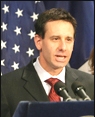
Buildings Commissioner Robert D. LiMandri, shown here, explains the concept at a conference tomorrow. The city has made major changes to its construction safety requirements since last year's tower crane collapse.
Every leader, manager, and safety professional I know hopes to see a higher level of worker awareness. But despite these wishes, there doesn’t seem to be a bull market in “awareness.” In fact, the opposite seems to hold. As external stressors pile on, people become more distracted, oftentimes so beset by personal worries—the economy? job security? retirement? effects on family relationships?—they have difficulty focusing even on simple day-in, day-out activities. So their default automatic pilot Safety programs become glitchy. And this doesn’t even begin to account for unusual events that really require split-second scoping out, decision-making, and immediate action.
A posh hotel besieged with panicked employees running for their lives and commandos ringing the buildings. We saw this crisis unfold live; it reminds us that now is the time to refresh employees’ awareness of evacuation and preparedness procedures and their own roles. Do it now!
Halfway through my bachelor’s degree in Environmental, Health, and Safety Management, I made the switch from Operations supervisor to Environmental, Health, and Safety Specialist. Through the course of the next two years, my view of the safety field as one that merely identifies hazards using OSHA and other tools made a 180-degree turn when I realized how versatile you have to be in order to be successful in safety.
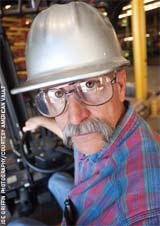
How many departments in your organization have requirements for visual inspections? How many of the codes, regulations, and legislative mandates demand that visual inspections be performed on a regular, weekly, monthly, quarterly, or annual basis? Think of the requirements for slings and wire ropes, aircraft parts, hazardous waste containers, and every commercial vehicle and load—the list goes on and on. Yet how many of those same codes have a single line that requires the inspectors (your employees) to be able to see and see correctly?
An investigation began after OSHA inspectors witnessed employees working on a scaffold without using fall protection equipment at a worksite in El Paso.