The violations occurred primarily because employees were not compensated for all hours worked when the company failed to pay for breaks that were less than 30 minutes in length, or for time spent by employees waiting for work areas to become available even though their shifts already had started.
The Connecticut-based metal finishing company also was cited for not establishing a regulated work area and ensuring contaminated protective clothing remained in the work area, and for not conducting cadmium exposure sampling.
The 33 serious violations include a lack of training, electrical hazards, inadequate personal protective equipment, failing to implement an adequate hazard communication and respiratory protection program, and failing to properly handle confined spaces.
OSHA issued citations for, among other things, failing to ensure workers were not exposed to noise levels at or above 85 decimals and to adequately protect employees from exposure to hazardous chemicals such as formaldehyde.

Clean and healthy hands depend on clean and healthy soap.
The company was cited for violations at its Parsippany, N.J., worksite, which it shares with Salonika Associates LLC, also cited after a Site-Specific Targeting Program inspection.
EPA conducted an inspection of the company’s warehouse to determine its compliance with the federal Resource Conservation and Recovery Act. The inspection found several alleged violations, including storage of waste pharmaceuticals, including hazardous wastes, without a proper permit.
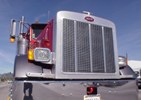
"All modes of freight transportation were impacted by the 'Great Recession,' but I'm growing more optimistic about the long-term outlook," said ATA Chief Economist Bob Costello. "There are certainly some risks, but I think better days do lie ahead for the freight hauling business."
Inspections at the facility found improper bloodborne pathogens control, amputation hazards, noncompliant confined space entry, improper storage of fuel and oxygen, and more.
The three-hour programs, designed to help prevent noise-induced hearing loss among workers, are set to take place in Dallas, San Antonio, Corpus Christi, and Houston, June 7-10, respectively.
Within the past five years, OSHA has conducted more than 900 inspections at USPS facilities across the country and has issued more than 600 citations.
After an investigation, OSHA ordered the rapid transit company to take corrective action, including expunging disciplinary actions and references to them from various records as well as compensating the worker for lost wages resulting from the suspension.
“Although Pineville Lumber agreed to correct these violations, the company failed to follow through, leaving its employees exposed to workplace hazards that could result in serious injury or illness,” said Jeff Funke, director of OSHA’s Charleston Area Office.
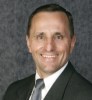
The Truck Safety Coalition will present the honor May 11 at the Sleep Apnea & Trucking Conference in Baltimore.
"These informal stakeholder meetings and written comments from stakeholders will help give OSHA direction to develop innovative ideas that will allow employers, workers and researchers to participate in improving occupational safety and health through the use of occupational injury and illness data," said OSHA chief Dr. David Michaels.
The MIOSHA investigation found the building was not completely inspected for asbestos. As a result, a major asbestos fiber release episode occurred, potentially exposing employees and building tenants to asbestos.
To do this, it asks users to answer a few relevant questions and then generates a customized list of federal disability nondiscrimination laws that likely apply, along with easy-to-understand information about employers' responsibilities under each of them.
The agency is hosting three meetings next month -- one on June 3 in East Brunswick, N.J., another on June 10 in Dallas, and the final on June 29 in Washington, D.C. -- to gather comments. Registration will remain open until the meetings are full.
As a result of an October 2009 inspection in Cincinnati, OSHA issued Lowe's four willful citations with a proposed penalty of $40,000. Based on a November 2009 inspection, OSHA issued the Dayton store seven willful citations with a proposed penalty of $70,000.
This contractor has been inspected by OSHA 25 times since 1991 and has been issued numerous willful, serious, and repeat violations, including many lead violations, the agency said.