The OH&S Wire

Blog archive

'Something Needs to Change in the Way We Run Our Volunteer Fire Departments and EMS Squads'

[Editor's note: This blog post was submitted by Capt. Tom Lindtveit in response to "Restocking the Fire Service," a commentary by Editor Jerry Laws in the April 2010 print issue of OH&S.]

I read your editorial on 'Restocking the Fire Service' with interest.

It is good to see this conversation coming out in other venues besides Fire Service publications and the occasional local news articles that show up each time a community realizes (all of a sudden) that they are in danger of losing their local Fire Response capability due to dwindling numbers.

The points you raised were of course true and accurate, however I would like to take the opportunity to mention that there are always other factors involved that do not make it into the public forum where they should be, so that they might be addressed or at the very least become known and understood.
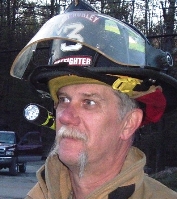
Manufacturing Engineer Tom Lindtveit is a National Pro-Board Certified Fire Service Instructor II, teaching for a local Fire/Rescue Training Center (also volunteer), where he focuses on safety and hazard recognition training.First, the Career and Volunteer Fire Services are not the same entities they were 30 years ago. Even though we say we have "200 years of tradition unimpeded by progress," the truth is that the last 30 years have seen a lot of changes for the Fire service and, in particular, the Volunteer Service. This reflects an effort to increase safety, reduce fatalities and injuries, and improve the response capability and skill level. Expectations too are rising from within the served communities and each time we get "the call," people expect to see something akin to what they are exposed to on TV: a professional operation with all the toys and tricks. Consequently, the scenario that frequently took place in the 1970s where a new member could be accepted into a Department at their monthly meeting and find themselves hanging on the tailboard and going to their first structure fire just a couple of hours later, is now, hopefully, long gone (and we don't ride tailboards anymore). Today almost every Department has probation periods, training requirements before being allowed to respond, physicals, drug tests, and criminal background checks, at a minimum. Every state, county, and Department around the country has different requirements so it is difficult to generalize, but I can speak from my local experience. Entry-level training generally means taking the Firefighter One Course in our state.

This is approximately an 85-hour class spread out over several months and covers the basics of firefighting. Classes in additional disciplines are also strongly recommended, such as Auto Extrication, Firefighter Two, Technical Rescue, HAZMAT Tech, and the list goes on depending on the department and the types of responses they provide. Entry level for an EMT in this state requires about 150 hours of initial training, as well as re-certification every 2-3 years (another 50 hours or so). Most states are similar in this respect. A few Departments require both EMT and Firefighter skills from their personnel. Taking the classes is difficult for most volunteers with the impact on work, family, and leisure time, but just to add another hurdle, these classes are in fact hard to find in many places or require long commutes for the students.

Some counties have waiting lists to enroll in a class. States are cutting budgets, reducing the number of instructors, and reducing training opportunities. Imagine taking the big step to join a Department only to find that it takes 2-3 years to get into a class that fits your schedule. How long can we expect people to wait until they can contribute?

Aside from the difficulties in getting new members, the bigger picture shows us that after all the time a person puts in to become proficient and comfortable, they are often burned out in a few years. Particularly if they move up the ladder and become an officer. The amount of responsibility and additional time requirements placed on officers -- particularly in EMS where there are monthly reporting requirements; ambulance and facility inspections by the Department of Health; new protocols to be rolled out, taught, tested, and documented among the responding members; supplies to be ordered; and all the day-to-day business that can make being a volunteer very time consuming. This is not like any other "community volunteer" organization. There is no "season" like Little League or soccer. We don't get an "off period," and things need to be done in a timely manner to keep equipment in service.

So even if we run a major call at midnight and get back to the station at 4 a.m., we still have to stay and repack hose, fill the SCBA bottles, clean the masks, and get everything ready to go. There is no opportunity to "come back tomorrow" and finish it up. This continuing workload is something that can make members leave after getting to the point that they have gained enough experience to make a difference in their community. Add to that the emotional stress we sometimes endure being up half the night working through some poor soul's tragedy of a lifetime, followed by a quick shower and going into our regular job where we are expected to act and function as if the past six hours never occurred. To quote Pogo: "It ain't easy being us."

In short, getting them into the Service is tough, but do-able. KEEPING them in the Service is the hard part. Without a way to reduce some of the demands on our volunteers, I see no practical way to improve on the retention record. Certainly, Fire Corps and Junior Firefighter programs are a great idea that can help. We are trying a similar approaches in our Department by bringing in non-responding volunteers to help with important tasks where they may have special skills and they can lighten our burden, such as bookkeeping, records maintenance, computer work, grant writing, review boards, supply stocking, and ordering. We also bring in youth members and provide mentorship, training, and support as they grow into the Department. Still, this puts a new burden on the officers to find these folks, bring them in, train them in what is required, and service their individual needs as a volunteer.

For sure something needs to change in the way we run our volunteer Fire Departments and EMS Squads. Although I am certainly not typical of most volunteers, I put in about 12-20 hours a week for the Department covering communications, planning, ordering, solving problems, meetings, and a handful of other things. This does not necessarily include actual responses (which, let's remember, is the real reason I do this). In the last five years, I have accumulated over 950 hours of formal classroom time spread out over 50 some odd classes and various certifications. This does not include weekly drills, meetings, or practice evolutions, nor does it include the sessions I teach. This is certainly not the norm (and anybody who knows me will tell you that I am not normal anyway; in fact, with all due respect to my brothers and sisters in the Service, I would say most Firefighters are not normal -- who would choose to run in when everybody else is running out?), but it does point out that the Service can take an awful lot of a person's time if they allow it.

Communities and lawmakers need to realize that there are only so many demands you can place on volunteers before they start to get busy with other things where they have more of a choice and less stress. Tax credits of a few hundred dollars are nice, but they usually don't address the volunteers who do not own property. In addition, the value of what communities receive from the Fire and EMS Departments far exceeds the small offerings provided by local governments. Just do some quick calculations on what it can cost a volunteer in your town to respond to 100 calls a year. Let's say it's only 4 miles to the fire house (800 miles a year to and from) and they get 18 mpg on their family truck or car. That comes out to $178.00 at $4.00/gallon. That is cash out of their pocket. If they do more calls, their personal outlay goes up.

I'm just using this as an example of one of the little things that can wear on a volunteer that most folks never consider. There are still some small Departments around the country where the members purchase their own PPE (bunker gear) because the Department issues either outdated or incomplete gear. Suppose I told you up front that we really needed your help in our Fire Department, but first you need to put 100 hours into training and lay out a couple of hundred bucks a year for fuel. "Does that appeal to you? Great, sign here. Oh, by the way, did we mention that you might get seriously injured or killed while you are doing this?"

Speaking for myself, I can say that there are few experiences in life that will match the feeling you get when you can put a frightened elderly person at ease, help an injured child, save a home from fire, pull someone out of a wrecked car and provide care that keeps them alive until the next phase of their treatment, or perhaps have a direct hand in saving a life outright. There is nothing like it. But the price we pay to be afforded that opportunity is getting higher and higher.

Posted by Tom Lindtveit on Apr 16, 2010


Comments

Tue, May 11, 2010 Mike SC

This really strikes home for me. I was a FF/EMT in New England before being transferred to a southern state. Since my new state was national registry, I would have to take a course and retest. Since my FF1 & 2 were before proboard stamps, those would not transfer. I would have to start all over again. We need to make sure all states have a standardized system to allow volunteers to cross state lines without requiring them to start over. After 20 years, I too look twice when the siren goes by. Unfortunately, I do not have the time to chase it either.

Thu, Apr 29, 2010 Capt. Tom New York

Catching up with responses here, my last 2 posts were actually a single post but it was too long. Sorry. Rod: Yes, it’s true, some things never change, and they just get harder. We repeat the same problems over and over hoping the results will be different, but they seldom are. Marc: I hear you man. Training takes work and lots of effort, especially if you document it as required. Lesson plans, test results, student lists and all that take effort and time. But there is a lot of help for the toughest part: ideas and lesson plans. Get on the web and search around, use the resources out there. Go to Firefighterclosecalls.com and look at their Weekly Drills section, lots of great stuff there to save you some time. Wayne: Nice of you to check in buddy. For the readers out there, you should know Wayne is a long-timer in the volunteer fire service. A former Chief and a current and long time State Fire Instructor. I have taken many classes under his tutelage. Wayne knows his stuff and like me has formulated a few opinions. Wayne, I didn’t want to turn this into a New York discussion. The original Editorial was directed at a national level and I tried to keep my comments in that direction. But since you brought it up, you are of course correct that New York has almost no requirements. We both know that most Departments have some sort of common sense requirements and leaves it to the individual ‘Authority Having Jurisdiction’ which is either the Board of Fire Commissioners or Board of Directors (the former is a public agency, the latter is a private corporation). Yes, I agree that there are probably some small departments that do not have much in the way of concrete requirements that you and I would find acceptable. We also know these departments will continue to fall through the cracks until something goes wrong. You and I have always agreed that a firefighter can NEVER have enough training. I only used the training requirements to raise the level of awareness for the general reader who still thinks a person can just “join and be a firefighter”. It isn’t that way, and it shouldn’t be that way. Yeah some departments slip through, but they don’t provide much of a service to their communities either. My point was that it takes a lot of time, effort, and training to do the job that the served community expects to see. The general reader does not see what we go through to present a professional response when they call us, and I felt that this needed to be brought up. Looks like you and I have something to talk about next time I see you. Is your Safety Officer class still on for the fall? Captain Tom

Wed, Apr 28, 2010 Wayne DePew New York

I need to put this all into prospective. New York State has very little MANDATED firefighter training. The little training we are required to attend is mandated by the Department of Labor/PESH and follows the Federal 1910.156 and 1910.120 requirements for Fire Brigades an Haz Mat Response. Throw in Right-to-know, Bloodborne Pathogens, and a couple of other mandated Federal items and that is all we need to do right now. Any training levels required beyond that are MANDATED only by individual fire department by-laws, SOP/SOG, Best Practice Guidelines, etc. Any additional time spent is entirely up to the individual wanting more knowledge or time required again by each individual fire department. I totally believe one can never get enough training and needs to continually educate, train, and update throughout a firefighter's career, paid or volunteer. Training will save your life but, in perspective, our fire departments mandate our level of required training and no one else.

Mon, Apr 26, 2010 Mark Connolly Quaker Springs, NY

Good comments by all in the thread. I really like the things Mike Kerner referred to at Khul Hose but I find it hard to duplicate. We have a training schedule for the entire year. It gives us a good foundation but here's the rub. We have difficulty finding enough time to research the material to properly train at the weekly drills. Also, everyone is not meant to be an instructor. A couple officers do most of the drills and it really taxes thier time. Maybe fire districts need to consider a full or part time station keeper/instructor to keep the load off the voluneteers. Maybe even partner up with a nearby career service dept. to use one of their instructors if a deal could be struck. Just some comments and thoughts. Keep up the good work.

Mon, Apr 26, 2010 Rod Zeigler

I was very involved in the volunteer fire service when a lot of the changes started taking place 20-30 years ago, and these same concerns were expressed then as well. This was in response to our first "formal training" being established. It resulted in a lot of the older members dropping out and younger people taking on the responsibilities. Now, those younger folks are the "Old Hands" in the department and are facing the very same dilemma as their forefathers.
In today's economy, the younger people are working more hours to make ends meet, or not taking on any more expense than necessary. The fire service will continue, but there will have to be some new and innovative solutions discovered to allow well-qualified and eager people to serve without taking food from their families' tables.

Mon, Apr 26, 2010 Capt. Tom Lindtveit

To S.E. in Iowa, I hear you. This is an often stated problem. We run a risk in the Fire Service every time we respond. Training is obviously a key to safety. So the balance here is to find the right amount of training needed to keep people safe and restrict them to working within their training. I am a firm believer, like you, that the more training you have the better. That’s why I run up the classroom hours for myself. I got into this business because I watched a fiend die in front of me and I didn't know what to do. Although he had lots of good people working on him, I was helpless. I vowed, for his sake, to never let that happen again and I have been learning ever since. We all are held to the standards, but none of it is checked until one of two things occurs: A) There is and accident that prompts an investigation, or B) We apply for a State or Federal Grant. This is how the regulators get us to conform to what they want to see. I am all for compliance, but I see your point that some of these things can really put us under water. Thanks for entering a new point into the discussion.
Finally for Loree in Upstate NY, Thanks for checking in and the kind words.
I'd like to close by thanking Bill Shumm ( www.Firegeezer.com ) and Dave Statter ( www.Statter911.com ) for posting links to this discussion. Both of these gentlemen are premiere Fire and EMS bloggers and I refer to their sites at least twice everyday. You folks might like to check them out also. Bill I know is currently at the largest Fire Instructor's ( http://www.fdic.com/index.html ) conference in the world and took time out to put the crosslink on his page. I am honored by their referrals and kind words. (Now guys, lets see if Justin and Mark pick it up also.) In addition I'd like to thank Jerry Laws and OHSOnline for allowing this discussion to take place. These new forms of discussion (dubbed 'social media') are presenting opportunities for communities to open conversations and build understanding over a much wider playing field and come to more meaningful actions. OHS is showing that as a commercial publication they can give a platform for things that have largely been ignored in the past and many of these things are important to us, not only in our work lives, but also at home and in our living communities.

Mon, Apr 26, 2010 Capt. Tom Lindtveit

I suppose at this point it behooves me to post some sort of reply to all the responses. First I would like to thank everyone that posted. It's nice to know that this is not an issue I created in my own head and it appears that many are thinking along similar lines.
To Mike Kerner of Kuhl Hose, thank you so much for showing us how things can go. I checked out your Department's web site and you look like a crew that has it all together. Your Department and mine are similar in size and call counts. Mine is a tad bigger with a few more members, territory, and equipment, but still very similar. Your Officers, Directors, and Members have something very special to be proud of. You have truly gotten it all together. I'm guessing that you have more than a few people in your company that have good management skills and have brought together long range plans which they follow up on. This is the key and you seem to have found it. I can only wish the same good fortune for the rest of us. Getting people with the right skills in the right position can be extremely difficult in some communities. Again, I thank you for a well written, enlightening, and thoughtful reply.
To Lynn in PA, I appreciate you echoing and expanding on the pressures we face. Many times I have thought of how I could use my time to fix the house, spend more time with family, or advance myself professionally. Every time my first thought is how much I would miss the rush one gets after a major job. That feeling that no one can understand unless they have felt it. Making a real and immediate difference in someone's life is hard to describe, but I think you covered it. You have made a very hard decision you still regret, but it is what you had to do. 20 years is a long time to volunteer and I wonder how many folks in your community even know what that means.

Wed, Apr 21, 2010 Loree Upstate New York

Very well written. Says it all.

Wed, Apr 21, 2010 S.E. Iowa

The requirements thrust upon our volunteer dept. has made more than a couple of our most experienced members submit their resignations. While I can not understand why anyone would not want all the training they could possibly get, mandating it is another issue. I am well aware of the time restraints and strain placed upon families of the volunteers. Growing up in a small town as a kid I remeber all the boys wanted to grow up and get on the local volunteer department. There was generally a waiting list to do so, but not today. Some of the fallout I blame on the "free money" thought process. Any time we apply for a government grant, the government gets a little deeper into our department and the requirements continue to grow. Some departments need gear and that is the only way, but every time I hear someone bring up the "grant" word, I cringe a little. It's a tough situation really. While I understand the requirements and the need for the training, I have a very hard time having someone tell me I have to attend schools and training. I fully agree with Lynn's quote which is the bottom line. "What if you called and no one came". With something like 80 percent of all fire depts. in the U.S. being volunteer, it would be devastating to have all the members get trained out, burned out or just plain tired of the regulatory standards being shoved down our throats.

Mon, Apr 19, 2010 Lynn PA

Amen to Tom's article. I was one of the volunteers that you speak of who got tired of doing a job that required so much of my time. After 20 years I left EMS and really haven't had time for it since, although the yearning is still there. Everytime I hear a siren or see an ambulance go by I long to be a part of the crew. The excitement of the response, the satisfaction of the rescue or even the comfort that you provide is as addicting as any drug available anywhere. Why do I not go back? Time! My job and family life take up most of my extra time and although the song of the siren still calls me I must turn away due to other responsibilities. As for training it is difficult to find in my part of PA. Unless you already belong to an organized fire department or EMS service you have to attend a college course that is an hour or more away from where I reside. If we intend to keep the volunteer corps intact changes have to be made to make volunteering easier not harder. I remember one time when someone said "What if you called and no one came" well that time may well be upon us. Volunteerism isn't dead it is just frustrated with the requirements that have been placed upon it!

Fri, Apr 16, 2010 Mike Kerner

As the Immediate Past President of Kuhl Hose Company (www.kuhlhosefire.org), I would like to comment on your editorial on improving the ranks of volunteer firefighters.
In 2007, the year I took over as President of Kuhl Hose, we had 13 active members, i.e., members who could answer calls. Today, we have just under three times that many. Indeed, we have added so many members that purchasing bunker gear for all of our members has been an unintended strain on our budget.
I am not taking credit for the success of our department in attracting new and existing talent to our ranks. That falls on everyone in our department, who have taken it upon themselves to make this organization great.
I attribute our success to:
1) A recruitment committee which reaches out to the local high school, as well as citizens who might be interested in accepting the calling of being a volunteer emergency responder (medical, fire, rescue, fire police, or rehab).
2) Aggressively and constantly improving the training and certification levels of our members.
3) Stability of our Line Officer structure.
4) Building and maintaining a reputation of excellence that transcends the community -- and picking a few areas that we are determined to be better at than anyone else around.
5) Working harder and staying longer at incident scenes, regularly returning to the host department's station in a mutual aid call to help them clean their gear and get it put back into service.
6) Zero tolerance for hogwash at any level, including in the granting of voting privileges, while recognizing that this is a volunteer organization, and therefore we have to be a little forgiving.
7) Unwavering, uncompromising commitment to our members' (and the members of other departments) safety by the appointment of and the unquestioning support of a Safety Officer.
Like in everything else, the biggest battle in growing is not bringing in new blood, it's keeping the good people you already have and removing the bad ones. To that end, our business meetings are short. Drills are planned in excess of a month in advance and are designed to be interesting and compelling, even to experienced veterans. Whenever we do a standby, the monies collected go directly into our Benevolent fund -- i.e., money we spend on ourselves so that we can spoil our members a little.
We look around our response area to our neighboring departments and ask ourselves "What needs to be done in this area?" and we do it. We have become very good at the things nobody wants to do.
Volunteer fire departments, just like every other company, need leaders. It isn't a matter of trying to recruit more members. There will always be someone new interested in joining. If you can keep more of them, encourage them, support them, and cheer for them, you will grow.
Any department can do what we have done. The hard part is that you have to decide to do it, first.

Add your Comment

Your Name:(optional)
Your Email:(optional)
Your Location:(optional)
Comment:
Please type the letters/numbers you see above

Follow Us

Join OH&S Magazine on SafetyCommunity!
Join us on SafetyCommunity!

Upcoming Webinars

5/24: It's Not Just the SAMHSA 5 Anymore: K2/Spice, Bath Salts and Emerging Drug Trends
Which drugs should employers test for? Synthetic drugs like K2 and Spice, as well as seemingly harmless products like Bath Salts, have become as popular as the illegal drugs they try to mimic. These questions and more will be explored in this enlightening webinar.

5/30: An Introduction to Machine Safety
A common sense look at the regulatory framework of machine safety, best practices and practical solutions to ensuring a safe machine and workplace.

5/31: IAQ is Critical to Earning LEED Points, Green Building and a Healthy Workplace
This is an informative webinar on the role of high performance buildings in workplace health and safety.

6/14: OHSAS Guidance for Small Businesses: Protect and Grow Your Business
OHSAS 18001:2007 Certification offers more than just a globally recognized Health and Safety System. It can also help your business.

6/27: The Different Forms of Machine Safeguarding and When to Use Them
Some of the topics include: the different forms of safeguarding and when to use them. Safety devices to be reviewed may include: interlocking devices, light curtains, safety mats, safety scanners, two hand control units, and safety strips.

Spotlight

For May, OH&S puts the spotlight on: