JHPH Spotlights Technology's Transformative Power
A new special issue of Johns Hopkins Public Health shows how technology is revolutionizing health care, from home births in rural Bangladesh to a $7,900 device helping a faculty member walk again.
A new special issue of Johns Hopkins Public Health is devoted to technology as it is affecting public health. JHPH is the magazine of the Johns Hopkins Bloomberg School of Public Health.
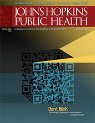 One of the features is titled "mHealth -– Can You Hear Me Now?" It describes several projects undertaken by Assistant Professor Alain Labrique, Ph.D., and other participants in the university's Global mHealth Initiative, including making use of ubiquitous cellphones to launch a mobile phone-based labor and birth notification system in rural Bangladesh. Pregnant women or their families sent text messages when the women went into labor, and nurse-midwife teams were then dispatched to their homes. A survey found 89 percent of home births in that region were attended by a health professional in this way, according to the article.
Another feature, "Big Data –- Overload" describes the work being doing by Karen Bandeen-Roche, Ph.D., and several colleagues to handle ever-larger datasets. "It's not unusual," Jim Schnabel writes, "for a public health study dataset nowadays to require a storage capacity on the order of 10 trillion bytes (10 terabytes) -— the equivalent of tens of millions of 1970s-era floppy disks." Traditional data collection, storage, and analysis techniques "can't always be straightforwardly scaled up to terabyte levels," he adds. (Bandeen-Roche is the Frank Hurley and Catharine Dorrier Professor and Chair of Biostatistics at the school.)
Also in the special issue is a short article by Sheila Fitzgerald, Ph.D., an associate professor of Environmental Health Sciences, about the NESS L300, a device that stimulates the nerves in her lower leg, allowing her to walk again after multiple sclerosis had forced her to rely for years on a power scooter to get around.