The Seven Cs to Initial Emergency Care Learning
Here's how you can prepare ordinary people to provide initial life support.
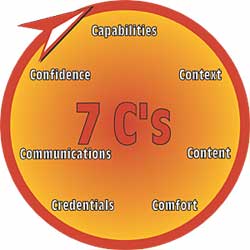 AFTER nearly a dozen years of clinical, academic, and administrative work in the then-young EMS System, in the early 1980s, I ventured "outside the box" of "traditional" EMS (albeit, only 10 years old at that point) and began to teach initial emergency care to non-emergency care clinicians as a full-time venture. When I started a private training business, my primary market was the marine transportation industry, where I taught basic emergency care to the captains and crews of oil tankers and tugboats. Although I fancied myself as quite the emergency care clinical expert, I quickly received a real awakening--and an invaluable lesson--relative to my abilities and my responsibilities as a professional emergency care educator.
A very wise, senior captain took me aside during one of my first "Emergency Care at Sea" programs. With a true alpha-male gesture, he placed his fatherly hand on my shoulder and said, "Son, you have the answers to all the medical problems on my ship." My already abundant "EMS ego" was immediately overinflated to the max. However, he quickly brought me back to reality with a real zinger: "The only problem is, boy, you don't know the questions!"
In the years that followed, several colleagues and I have traveled nationally and internationally, "translating" and "interpolating" modern EMS techniques and concepts to fit emergency care needs in maritime, airline, and other industrial environments. As we refined and conducted our initial emergency care programs for people in a variety of occupational and cultural settings, we discovered the "questions" in the "Seven Cs" of emergency care learning.
I offer these "Seven Cs" as a template to provide insight to new instructors--and perhaps to validate the performance of veteran instructors--who are working with such dedication to help those who help saves lives. I hope the "Seven Cs" can serve to focus attention on the questions that must be answered if we are to share our ability to support life with the general population; make Public Access Defibrillation an integral part of on-site emergency preparedness and community EMS systems; and collectively fulfill our mission to extend life in people with "hearts and brains too good to die."
The First 'C': Capabilities
All initial emergency care training programs must be based on sound behavioral objectives. Without a clear and concise definition of "performance expectations," we are not likely to "teach the right stuff" and our students are not likely to "do the right things" when needed.
In a serious medical crisis, initial responders generally are not expected to heal, cure, or "resuscitate" the victim. (We absolutely must dispel the urban myth and false expectation CPR will "bring 'em back.") The responsibility of those first to detect and then to act at the scene of a medical emergency is to try to prevent a serious illness from becoming sudden death and, by assisting the flow of oxygen to the brain, to prevent sudden death from progressing to brain death. No matter what the nature or severity of the medical emergency, the needed general capabilities of those average people to detect it and try to help are:
- Recognize obvious emergency medical need.
- Protect themselves.
- Seek appropriate help.
- Provide initial life support.
The specific performance expectation for the detectors and initial care providers of someone in cardiac arrest can be enumerated further as:
1. Establish unresponsiveness.
2. Channel emotional energy and decide to take action.
3. Ensure personal safety.
4. Determine the absence of airway, breathing, and circulation.
5. Summon appropriate medical help.
6. Initiate effective CPR until help or an AED arrives.
If and when an AED is readily available and on scene:
7. Turn on the power.
8. Attach the electrodes to patient's bare chest.
9. Follow the voice prompts (however many there are).
10. Continue to provide initial life support until appropriate help takes over.
Whether the patient is suddenly dead or critically ill, life support can be best described as helping airway, breathing, and circulation to be as efficient and as effective as possible. We cannot expect to duplicate the sophisticated care of EMS providers in every home and every work site. We can, however, expect everyone who encounters a serious medical emergency situation to assist the victim by calmly and efficiently helping the patient deliver as much oxygen to his or her brain as possible.
The Second 'C': Context
The context of an initial emergency care and life support training is determined by several factors: Who is being trained; where will they use it; can they retain it; and are they likely to act when needed?
I like to ask my students two questions at the beginning of each new program: What's your title now? What will it be at the end of this program? In point of fact, the vast majority of people who participate in CPR and AED learning experiences do so in conjunction with their employment. Their principal mission for their employer and their day-to-day at work responsibilities are reflected by their job title and the nature of the business or the role of the public service agency that employs them. (Generally, they also have titles off the job that reflect their relationships with their family and friends.) Rendering emergency aid to a family member, co-worker, friend, or even a stranger is not something they usually look forward to doing.
These average people are infrequent and, most often, reluctant responders. The greatest fear in life is death. Most folks generally don't want to be near anyone who is dead or is likely to be dead soon. Unless they are effectively prepared--not just being awarded a "certification card"--they will not have the willingness and courage to perform CPR and "take the AED off the wall" and use it if ever needed. First responders need to develop initial care knowledge and skills, but most of all they need to be motivated to act.
Motivation is perhaps the most essential determining factor in whether or not someone will respond to an emergency. According to leading behavioral psychologists, negative consequences usually are poor motivators. As noble as it sounds, "saving lives" is not an effective motivator because, most often, the implication is that if the patient dies, the rescuer failed.
What motivate best are consequences that are soon, positive, and certain. For example, Life Support is a much easier and better concept to convey because the process is always "successful" even if the outcome isn't. ("The operation was a success, but the patient died" is somehow more acceptable as long as everything is seen as being done properly.) To effectively motivate CPR and AED students, the focus needs to be on conveying goals that are perceived as achievable and helping to build a sense of accomplishment.
Context also involves directly relating the training content to the environment in which the actions and skills will be performed. For most citizens, the home or workplace is where CPR and an AED are most likely to be utilized. Therefore, CPR and AED training programs should relate directly to these environments, and standards must be made flexible enough to allow for the application of CPR under unique circumstances. Remember, most people are not emergency medical professionals and should not be treated as such in the classroom.
An example of the importance of context can be seen in how CPR is taught to flight attendants. In the American Heart Association's standards, one-person CPR is recommended for everyone other than emergency medical professionals. On land, this makes good sense. In the confines of a 737 at 28,000 feet, however, it is nearly impossible for one person to perform both compressions and ventilations for a passenger down in the aisle. Therefore, two people doing "one-person CPR" while maintaining the 15:2 ratio may well be an acceptable alternative procedure in an aircraft cabin.
The Third 'C': Content
Content is one of the most critical of the "Seven Cs." Discussing information, devices, or functions that are not relevant to a first care provider's decisions or actions in an emergency probably will cause considerable confusion on the part of individuals who rarely are called upon to act in such situations.
In the past, there was little question that CPR (and many other community emergency care education programs) tended to greatly overinform average citizens. It's always been tempting to teach ordinary people as much medical science and terminology as can be crammed into a short period of time. But interesting facts and medical trivia are of little value to the outcome of a medical emergency and can even be counterproductive by causing great confusion that usually results in inaction.
The information contained in an initial emergency care curriculum must be clearly defined and based on the established capabilities of these ordinary people who perceive and respond to a cardiac arrest situation. If information presented in a program does not directly relate to the needed and expected performance of the program participants, it shouldn't be in the curriculum.
To function effectively, infrequent responders to medical emergencies do not have to know the complete structure and function of the cardiovascular system nor the patho-physiology of cardiovascular disease. Realistically, as "background," they need to be taught little more than the heart-lung-brain relationship and how "oxygen to the brain" is the essence of life. (Miami Beach EMS pioneer and my late partner, Jim Healy, would call it "juice to the squash.") They then need to learn--through instructor-validated, hands-on practice--to detect the presence or absence of breathing and circulation; how to maintain an open airway manually; and how to provide ventilation and circulation in a regular, rhythmic pattern of "pumping and blowing." With the advent of AED technology, they also need to learn and practice how to turn on the AED, attach the electrodes, and follow the voice prompts.
By offering students a simple ABCs plan of action for patients who are suddenly dead (as well as those who are significantly ill or injured), ordinary people can better determine what the patient needs and provide initial life support in a potentially life-threatening medical emergency. This simple plan can greatly enhance individual confidence levels (as well as focus emotional energy, i.e., act calmly) by significantly decreasing the number of "steps" involved, thereby decreasing the number of things that people fear could "go wrong."
The Fourth 'C': Comfort
Comfort is an extremely important element in CPR and AED training, especially when training adults. It can be viewed from several different perspectives.
A formal classroom environment is often intimidating for adults. Ideally, CPR and AED training should be conducted for small groups in a room or environment that's free from distractions. If conducted in a "formal" classroom, the seating arrangement and environment should be made as physically comfortable and "non-academic" as possible, because going to school is not the preferred activity for most people. Teaching aids, audiovisuals, training materials, and CPR mannequins must be readily available, clean, and in good working condition.
There also must be suitable space for individuals to practice the skills of CPR and AED application. Having a personal CPR mannequin for each participant (now possible because of smaller, low-cost mannequins) affords each student more time to practice and avoids the embarrassment of the "they're all looking at me" syndrome.
Complex medical information and terminology are quite menacing to most non-clinicians and of no value in enhancing the outcome of a cardiac arrest. It is critical for CPR and AED trainers to present information and illustrations in an informative and realistic fashion, but great care should be taken to avoid "shock tactics." Moreover, gory illustrations can make individuals quite uncomfortable and result in their being less likely to pay attention and fully participate.
Perhaps the most uncomfortable and complex of all topics for most people to deal with is death, especially if there is a perception of somehow being responsible for the death of another human being. Clearly, someone in cardiac arrest is dead and a would-be rescuer cannot make him or her "more dead." But just telling students that fact will be of little consolation unless they understand there are several factors that determine whether or not someone will survive a cardiac arrest, over most of which they have no control.
Key survivability factors include: prior state of health, severity of the event, the availability of EMS and specialty medical care, and the prompt application of initial life support. The preliminary emergency care provider controls only life support (the delivery of CPR and rapid defibrillation). He needs only to follow an approved process of care; he is not responsible for the outcome (clearly, an achievable goal).
Two other related topics of great discomfort for most CPR/AED students are litigation and disease. Instructors often, unwittingly, exacerbate these understandable but unfounded fears by discussing these topics first in life support training programs, thus giving them undue priority and import. Yes, it is possible first responders can be sued and that they can catch terrible diseases during CPR--but it hasn't happened yet. So-called "Good Sam" laws are virtually untested in most states, and after tens of thousands of CPR attempts, there are no reported cases of a first responder contracting a bloodborne pathogen disease while doing CPR or utilizing an AED. (Wearing protective gloves and using a barrier mask or faceshield are far more important to overcoming the "yuck factor" than they are to epidemiology.)
One other important aspect of comfort for your students is how well organized the instructor is and how well he or she manages the logistics of program conduct. The key to success is to pay attention to details such as assuring that AV projection equipment is working order (including extra bulbs); training aids and mannequins are clean and functioning; needed patient care materials and supplies are available; and there are sufficient quantities of books and/or printed handouts. Be very attentive to seating, lighting and room temperature.
Attending to the comfort factor in CPR and AED training is not just being kind to students, it is a major aspect of learning and retention. It's a known fact that people will tend to mentally block out the details of unpleasant or uncomfortable experiences and are far more likely to recall even insignificant details from experiences they enjoyed. Years ago, I found the following words of wisdom on a greeting card, and I think they have great relevance to teaching emergency care procedures to infrequent responders: "People may forget what you said. They may forget what they did. But they will always remember how you made them feel."
The Fifth 'C': Credentials
A number of professional organizations, governmental, and/or regulatory agencies require certain individuals or employees to participate in a CPR and AED training program. When initial emergency care training is mandated (or voluntary participants are granted legislated immunity protection), recognized and/or approved programs are generally noted in the regulation.
Innovation and creativity are the backbone of progress. Fortunately, a number of outstanding and proven effective, nationally and internationally accepted CPR and AED programs are available to help decrease mortality from sudden death. Most of the popular programs feature a variety of audiovisual training aids, printed participant materials, and detailed lesson plans. But it must be noted that regardless of which curriculum is taught, participant certification is usually an attendance requirement, not a requisite of function nor an obligation to act in an emergency. Cards, pins, and patches are of no value if the CPR/AED graduate doesn't have the willingness and courage to start CPR and use the AED if necessary.
Competent, proficient instructors are the absolute key to effectively preparing people to respond appropriately to a cardiac arrest situation. They breathe life into the facts, figures, and functions of an emergency care course. Generally, those who teach most reputable CPR/AED programs must complete a certified instructor program. However, much like their students, the qualifications of these instructors must be far more than just having an instructor certificate.
First and foremost, instructors must be very competent in their own emergency care and life-support skills and abilities. They must have a passion for the importance of initial emergency care and immediate life support. It is very important that they possess good organizational skills; they must be good communicators and even better listeners.
Instructors with actual emergency medical clinical experience (such as physicians, nurses, EMTs, or paramedics) have great credibility in the classroom, but they don't automatically have the requisite ability to communicate their expertise and clinical know-how to those who do not share their motivation and mindset to respond to emergencies. Similarly, instructors with a non-emergency medical background may be great communicators and relate extremely well to students who likewise are non-clinicians and/or share a common occupation. But they don't always have the flexibility to adapt the curriculum to the specific needs of students, or to answer and/or deflect "what if" questions.
Good instructors are not born nor appointed; they must be developed with the help of their parent training organizations, peer groups, and personal determination. Their instructional skills need to be continually refined and updated. Great instructors possess the drive to stay current through reading, periodic continuing education, and ongoing networking with other instructors.
Wherever and whenever possible, the longstanding practice of mentoring should be utilized, especially for new instructors. "Team teaching" with, watching, and learning from a seasoned colleague are the excellent ways to refine and polish one's own teaching abilities. Think about it: No one becomes a good and proficient EMT or paramedic simply by completing a state-approved school. It takes time, experience, and usually the watchful tutelage of a caring partner or two.
The final and most important credentials of an initial emergency care instructor, whether she is paid for her services or volunteers, are her personal and professional integrity. Her ethical behavior in the conduct of her training duties and relationship with clients and vendors is the cornerstone of her abilities and success.
The Sixth 'C': Communications
The essence of education is learning. Learning requires that students develop the knowledge, skills, and confidence to act. No matter how prestigious or innovative an emergency care curriculum may be, if it is not well presented, it will not be understood and retained, nor will it affect behavior in an emergency.
How well knowledge is acquired and retained has been well documented:
- We retain 10 percent of what we read.
- We retain 20 percent of what we hear.
- We retain 50 percent of what we see/hear.
- We retain 70 percent of what we see/say.
- We retain 90 percent of what we say as we do.
When considering how various training tools and methods of instruction affect the learning process, Dale's Continuum is even more revealing:
|
Least effective |
|
Verbal Symbols |
|
Visual Symbols |
|
Radio/Recordings/Still Pictures |
|
Motion Pictures |
|
Videotapes |
|
Exhibits |
|
Field Trips |
|
Demonstrations |
|
Dramatized Experiences |
|
Contrived Experiences |
|
Direct, Purposeful Experiences |
|
Most effective |
Educational psychologists have determined (and experience has shown) that the most effective method for helping people learn any skill is to incorporate appropriate information, integrate stimulation of multiple senses, and give students ample opportunity to practice repeatedly and simulate desired actions. (The latter is especially crucial for infrequent responders, who rarely have direct experience.)
Using dynamic, instructor-intensive lectures, colorful visual aids, frequent "hands-on" skills sessions (with verbal "coaching" and then instructor validation of correct performance), and simple printed materials is the most effective way of teaching emergency care performance. To put it even more simply, if an instructor wants his students to learn effectively, he has to follow the dictum: Tell, Show, Do, and Review!
An essential component of review is not only to summarize key points at the end of each section/module, but also, as skills are being performed, to take care to correct/adjust improper performance without humiliating or demeaning the student. Treat each student with dignity, respect, and genuine concern. Don't allow yourself to get off topic with esoteric "what if" questions. Generally, unless a hypothetical question directly involves life or death, direct the inquisitive student to discuss it with you after class. (Try to avoid using break time for Q&A, because instructors need to have short breaks, too.)
To best communicate medical life support information to average people, instructors need to adhere to the "Theory of Relevantivity." Whenever possible, information and illustrations should relevant to the student's body and life experiences (i.e., it has to be personal). As the old sales limerick goes, "When you sell John Brown what John Brown buys, you've got to sell it to John Brown through John Brown's eyes."
Another important aspect of communications is the faculty-to-student ratio during skills/validation sessions. The principal element of learning is practice in the classroom and laboratory setting; direct scrutiny and support by a trained instructor is vital. Minimum recommended faculty-to-student ratios should range from one faculty member per six students to one faculty member per eight students.
The Seventh 'C': Confidence
Earlier, I noted the greatest fear in life is death. The second greatest fear in life--and an equally likely cause of situational paralysis--is "screwing up" in public. Regardless of the circumstances, without confidence, most people won't attempt to do anything. Effective CPR and AED training must produce individuals who know what to do and are confident they can do it. The greatest disappointment of the public CPR training experience over the past 30 years is the confounding number of trained individuals who don't respond when needed, not even for family and loved ones.
No one can give another person confidence, but instructors certainly can help their students develop it. The state-of-mind we call confidence is primarily gained from two key factors: achievable goals and a sense of accomplishment. By offering realistic expectations, presenting simple explanations and rationale of actions to be taken, and by validating correct performance during practical skills sessions, instructors help CPR/AED program participants build confidence.
There's an old cliché regarding maintaining a skill that states, "if you don't use it, you'll lose it." The same can be said of confidence. An important way instructors can help their students maintain and enhance confidence is by encouraging and helping to motivate them to hold and participate in regular emergency care drills, scenarios, and simulations. The availability of inexpensive, personal CPR mannequins and the use of easy-to-follow checklists make it feasible for confidence to have continuity.
In this post 9/11 era, there is another important benefit to developing and maintaining the confidence to do CPR and use an AED. The need for everyone in each city and town to have a greater sense of emergency preparedness is now more obvious than ever. Remarkably, the most important lesson learned in CPR/AED training sessions by ordinary people is not just how to "pump and blow" or operate an AED device. Rather, it's the development of the mindset needed to respond in an emergency. This attitude and awareness of emergency preparedness is applicable to all types of personal, natural, and man-made crises and disasters.
An Eighth 'C'
In the journey of optimally preparing ordinary people to take extraordinary action, there is one more "C" seasoned instructors will find useful: creativity. There is no single answer to all CPR/AED training needs. Keeping initial emergency medical care training fresh, stimulating, and effective requires instructors and program developers who continually explore new methods of delivering CPR/AED training. For example, online and/or self-study learning with the follow-up of an instructor-supervised practicum holds great promise, especially for refresher training and in-home use.
Medical science and patient need dictate the basic subject matter of initial emergency care training. But great instructors are like great chefs who rarely follow a recipe: Only give them the ingredients, and they'll make a wonderful presentation. The "C" of creativity affords dedicated, talented instructors an opportunity to enhance and expand their important service to their communities.
Conclusion
Following CPR and/or the application of an AED, patients don't just wake up and say, "Thanks, I needed that." They need continued, sophisticated emergency medical care and, often, surgical intervention and rehabilitation. EMS professionals often refer to the "golden hour," during which definitive care for seriously injured people must begin if there is to be any hope for their survival. But if the emergency is a cardiac arrest, it is the life-supporting actions taken during the first "precious platinum minutes" that may well determine whether that patient will have the opportunity to benefit from the sophistication of modern EMS and cardiac care systems.
Good CPR and AED training can help prepare just about anyone to have the courage to respond to a medical emergency situation with the needed knowledge, skills, and confidence that can help continue life in cardiac arrest victims "with hearts and brains too good to die." Quality instruction from quality instructors who know their way through the Seven Cs can make it happen.
This article originally appeared in the June 2004 issue of Occupational Health & Safety.