RMPs contain information assessing plans in place to prevent and respond to accidental releases of hazardous substances from facilities and must be updated at least every five years.

Beryllium is the fourth element in the periodic table. It comes right after lithium and before boron. It's a metal that looks like aluminum but is lighter and stronger. In ceramic form, beryllium oxide (BeO) conducts heat but not electricity and has the highest thermal conductivity of commercially available ceramics. It is used in everything from wireless base stations to satellites and advanced radar systems.
"Mercury and lead can pose severe threats to people's health, so properly managing waste that contains them is of the utmost importance," said EPA Acting Regional Administrator George Pavlou.
Intended for a range of stakeholders, from architects to owners, Guideline 29-2009 offers a flexible approach to risk assessment for a wide range of safety and health hazards, according to ASHRAE.
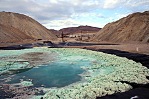
The threats on the site come from metals contaminating the groundwater and fugitive dust that could impact human health and surface water. Mining operations enhanced levels of naturally occurring uranium, making the radiological substance more pervasive and mobile in and around the site.
Under the terms of the proposed settlement, which is currently available for public comment, Puainako Town Center in Hilo, Hawaii, must close all eight large capacity cesspools owned and operated by the company by May 1, 2009.
Implemented in 1997, BNSF's Product Stewardship Award is presented to shippers who transported a minimum of 500 loaded tank cars of hazardous materials during the previous year with zero non-accident releases (NARs) (releases that are not caused by a derailment or collision) during the entire transportation cycle.
CSB Chairman John Bresland warned this week that extensive secrecy claims like the one made in this case, which involves an August 2008 explosion at Institute, W.Va., could compromise CSB's effectiveness as a safety agency.
According to the study, the release of mercury vapors, which can be inhaled or absorbed through the skin, presents an environmental and occupational hazard for workers involved with handling and transport of the products.
The federal agency directed its staff to continue enhancing the security of cesium chloride radiation sources and encourages research on alternatives, but it agrees near-term replacement is impractical and would harm cancer treatment, research, and emergency response capabilities.
Texas Oil and Gathering Inc., its owner John Kessel, and its operations manager Edgar Pettijohn pleaded guilty on April 16, 2009, in U.S. District Court in Houston to criminal violations related to the disposal of refinery wastes at an underground injection well in violation of the Safe Drinking Water Act, the Justice Department announced.

Their report on progress toward achieving eight major goals by 2017 shows how the industry as a whole is improving the safety of toxic inhalation hazard and flammable chemical shipments by rail.
The company disclosed more than 680 violations of water, air, hazardous waste, emergency planning and preparedness, and pesticide regulations to EPA after auditing 12 facilities it acquired from DuPont in 2004.
The company has been fined $121,500 for violations associated with process safety management, hazardous waste operations, and emergency response, including the company's failure to identify all of the causal factors of the incident during the investigation. The chemical release resulted in the evacuation of residents living within a three-mile radius of the facility.
The training covers the characteristics of ethanol tank cars, so that responders can quickly identify this equipment. Responders also are given information to help them interpret railway manifests.
Employers cannot rely on online or video training tools as the sole source of training because physical manipulation of actual components of PPE (as opposed to virtual components of PPE) must be part of the program, the agency notes.
The company, a small municipal solid waste burner, was accused of not taking the correct measures to control its mercury, dioxin, and furan emissions.
Through the agreement brought on by a shareholder resolution, the company has committed to survey its current U.S. potato suppliers and compile a list of best practices in pesticide reduction that will be recommended to the company's global suppliers (through the company's Global Potato Board).
At least until results from sampling activity are known, EPA urged all persons to stay away from the site in Kansas City, Kan., with a special emphasis for parents to keep children off the property.