
Training is critical, including a relevant, compelling message that explains the reasons for precautions as much as the precautions themselves.
The Board of County Commissioners of Frederick County, Maryland, has settled alleged violations of underground fuel storage tank regulations, the Environmental Protection Agency announced recently.

Also, because summer is the peak season for one of the nation's deadliest weather phenomena--lightning--NOAA is calling attention to Lightning Safety Week, June 21-27, by offering a number of new, free resources to increase safety awareness.
Gov. Jack Markell toured Sunoco's Marcus Hook refinery on May 28 and stressed the importance of keeping the plant shut down until the cause of the May 17 explosion and fire is known.
A May 28 conference co-sponsored by the California Department of Public Health looked at sustainable farming and ecologically friendly pest control, along with health impacts of pesticide use.
The intent of the Residential Lead-Based Paint Hazard Reduction Act and its accompanying regulations is to help prevent exposure to lead-based paint by requiring disclosure and notification of actual and potential hazards when selling or leasing housing.
In addition, the standard's Fire Protection in Shipyard Employment subpart includes sections on implementing a fire safety plan, fire watches, and fire response. Hexavalent chromium has been added to the list of air contaminants whose concentrations should not exceed stated exposure levels.
In a final report issued on May 27 into the November 2008 fertilizer tank collapse at Allied Terminals in Chesapeake, Va., the U.S. Chemical Safety Board (CSB) recommended that the Commonwealth of Virginia regulate or authorize local jurisdictions to regulate the design, construction, maintenance, and inspection of large fertilizer storage tanks located on the Elizabeth River.
More than a million toys have been voluntarily recalled by the company due to the possible presence of lead in the paint; the items are being stored at its facilities in Illinois and Iowa.
The facility failed to report many hazardous chemicals stored at the site including sulfuric acid, lead, zinc, and hydrochloric acid, EPA said.

A study in CDC's Morbidity and Mortality Weekly Report is timed to 2009 National Recreational Water Illness Prevention Week (May 18-24) with the aim of educating parents, instructors, pool maintenance workers, and others.
The Department of Labor recently announced that it has paid more than $400 million in compensation and medical benefits to Colorado residents under the Energy Employees Occupational Illness Compensation Program Act (EEOICPA). The act was created to assist those individuals who became ill as a result of working in the atomic weapons industry. Survivors of such individuals may also be eligible for benefits.
"This agreement highlights each group's dedication to enhancing professionalism in the field of hazardous materials management and the overall environmental, health, safety and security (EHS&S) industry," said AHMP President Harry S. Kemp, CHMM.
Recipient Erik P. Delaney, a U.S. Marine Corps veteran who specializes in EH&S, hazmat, and safety management, "has distinguished himself by the breadth and depth of his knowledge regarding the management of hazardous materials, and through the professionalism he exhibits in dealing with the public, his co-workers, and other industry professionals," said IHMM Board of Directors Chair Elizabeth Pfeiffer.
The manufacture of PCBs was banned in 1979. "These federal rules are intended to protect human health and the environment from risks posed by these toxic chemicals," said Daniel Duncan, EPA's regional PCB program coordinator in Seattle.
Filed April 28, the petition says OSHA has acknowledged both the Permissible Exposure Limit (PEL) for crystalline silica and OSHA’s abrasive blasting standard (29 CFR 1910.94) are "seriously outdated."
Researchers have detected common plant toxins that affect human health and ecosystems in smoke from forest fires. The results from the new study also suggest that smoldering fires may produce more toxins than wildfires--a reason to keep human exposures to a minimum during controlled burns.
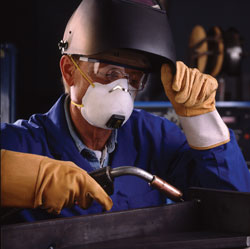
On Feb. 23, 2009, a federal appeals court resolved the final challenges to the Occupational Safety and Health Administration’s Hexavalent Chromium (CrVI) Standard that was promulgated in February 2006. The last challenge argued to lower the permissible exposure limit (PEL) to 1 μg/m3 from 5 μg/m3. This appeal was denied, and OSHA’s PEL was upheld by the court.