The U.S. Environmental Protection Agency is adding 11 new hazardous waste sites that pose risks to human health and the environment to the National Priorities List of Superfund sites. Also, EPA is proposing to add 10 other sites to the list. Superfund is the federal program that investigates and cleans up the most complex, uncontrolled, or abandoned hazardous waste sites in the country.

The nation's OSH regulatory agency will become operational in November 2009, and it will deliver the laws by December 2011, Chairman Tom Phillips promised.

But the two senators who introduced legislation on Sept. 8 to strengthen security and federal oversight of the six laboratories say the labs remain vulnerable.
The U.S. Chemical Safety Board (CSB) has released a new nine-minute computer animated safety video depicting a tragic reactive chemical accident that devastated T2 Laboratories in Jacksonville, Fla.

The Oct. 6-7 and Nov. 17-18 events in Arlington, Va., are part of the National Nanotechnology Initiative's nanoEHS series.
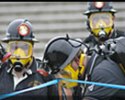
Nine Ohio mine rescue teams will be assigned the same emergency problem and will be evaluated by state and federal mine inspectors on their procedures and speed. Two courses will run simultaneously and teams will be sequestered until it is their turn to compete.
The company was cited for violating Resource Conservation and Recovery Act requirements for treating, managing, and disposing of hazardous waste, including failure to mark, label, and keep hazardous waste containers closed; and comply with training, monitoring, inspection, and recording requirements.
Under the settlement, the city will improve its sewer system to minimize, and in many cases, eliminate overflows of sewage combined with stormwater overflows into the river at a cost likely between $100 and $150 million. The city has to have a comprehensive plan in place by calendar year 2020 or 2025, depending on the city's financial health.
During a 2007 inspection, EPA staff found acetone and toluene being stored improperly at the facility. The agency noted that exposure to such solvents can affect breathing and cause vomiting.
The massive December 2007 explosion and fire at T2 Laboratories in Jacksonville was caused by a runaway chemical reaction that likely resulted from an inadequate reactor cooling system, investigators from the U.S. Chemical Safety Board (CSB) said in a final draft report released on Sept. 15.
The serious violations OSHA unearthed related to inadequate process safety management of highly hazardous chemicals, lack of emergency preparedness and response procedures, and poor respiratory protection for workers.
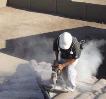
The newly downloadable document addresses methods for controlling silica such as wet cutting during construction operations and using vacuum dust collection systems.
A panel presentation and discussion on "The State of the Granite Debate," focusing on the issue of radon and radioactivity from granite countertop materials, will be part of AARST's 21st International Radon Symposium next week.

With more participation this year than ever before, more than 100 radio stations in some 20 states are planning to help raise awareness of mesothelioma by playing a Warren Zevon song followed by a 20-second segment about the incurable disease on Saturday, Sept. 26.
The DOT inspector general testified Sept. 10 that the department's leadership has directed PHMSA to implement an action plan, but oversight of permit holders' safety compliance remains an issue.

The agency has published proposals to identify the group as Substances of Very High Concern because of their carcinogenic, mutagenic, and/or reprotoxic properties and potentially serious effects on human health, or for persistent, bioaccumulative environmental effects. Comments to ECHA are due by Oct. 15.
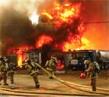
At a public meeting in Jacksonville, CSB investigators will present their final report on the batch reactor explosion that killed four workers and injured 32 people Dec. 19, 2007.
The settlement is related to a release at the company’s ammonia and nitric acid manufacturing facility in Deer Island, Ore., on Sept. 29, 2008. EPA alleges that the company failed to notify the appropriate emergency response entities until approximately 11 hours after the release occurred.
Exposure to high levels of xylene and ethylbenzene can cause a variety of human health effects, including harm to the nervous system, fatigue, general weakness, memory loss, and visual problems.
In addition to issuing willful, repeat, and serious citations to the company, OSHA also issued it a notice of failure-to-abate citation relating to its failure to implement a respiratory program, institute a medical surveillance program for workers overexposed to chromium VI, and develop and implement a hazard communication program for workers exposed to caustics and corrosives.