The board concluded Wednesday that the American Petroleum Institute's Recommended Practice 1162 should explicitly identify 911 emergency call centers as emergency response agencies included in pipeline operators' public education programs.
The investigation found 32 serious violations, including failing to evaluate the worksite for exposures to hydrogen sulfide, develop procedures for waste stream processing, develop decontamination procedures, and train workers on the hazards associated with confined space entry on barges.

The collapsed I-35W span in Minneapolis, the crash of Colgan Air Flight 3407, and the US Airways splashdown in the Hudson River are among the events presenters will discuss during the Nov. 17-19 course at the NTSB Training Center.
"Employers should not assume that OSHA will not conduct inspections because much of this work is done at night," said Paul Mangiafico, OSHA's area director for Middlesex and Essex counties. "We will conduct inspections where and when we must to ensure that employers implement and maintain effective controls to minimize this hazard to their workers."
Although there is a decline in the domestic production of meth in recent years, vigilance is warranted because of the destructive nature of the drug and the environmental hazards caused by meth labs, the agency said.
One of the most widely used agricultural pesticides in the United States, atrazine can be applied before and after planting to control broadleaf and grassy weeds.
When asked if it was acceptable to throw out items contaminated with blood or body fluids in either septic systems or normal garbage, the OSHA director said, “It is the employer's responsibility to determine the existence of regulated waste. This determination is not based on actual volume of blood, but rather on the potential to release blood (e.g., when compacted in the waste container).”
"The more than 7,000 tons per year of sulfur dioxide reductions secured by this settlement will produce significant and measurable public health benefits for downwind communities," said EPA’s Cynthia Giles.

Jukka Takala, director of the European Agency for Safety and Health at Work, is inviting stakeholders to use its new blog and sharing his views about enforcement, persistent risks, occupational diseases, and more in 28 short videos.
The Chemical Safety Board (CSB) released a final report on Oct. 5 on the uncontrolled oleum release from INDSPEC Chemical Corporation in Petrolia, Pa., which forced the evacuation of three surrounding towns in October 2008.
The company allegedly did not monitor to determine asbestos exposure levels, use wet methods to clean up debris, or provide HEPA vacuum cleaners to collect debris and dust, among other serious violations.
In a new safety bulletin based on preliminary findings from the ConAgra Foods natural gas explosion in Garner, N.C., the U.S. Chemical Safety Board (CSB) urged companies, gas installers, and contractors to follow safe practices during gas purging operations, including venting purged gases outdoors whenever practicable.

A revised eyewash and showers standard is available. Comments on a chemical apparel standard are due by Nov. 9, the opening day of the association's Fall Meeting.

The Globally Harmonized System, or GHS, was proposed by the United Nations in an effort to internationally standardize classification and labeling of chemicals through the use of pictograms, signal words, and hazard warnings. Benefits of the GHS include reduced time and costs involved in meeting multiple regulations for labels, improved comprehension and understanding of health and environmental hazards, facilitation of trade by removing barriers created by various health and safety requirements, and reduction of duplicate testing.
The proposed change to ANSI/ASHRAE Standard 62.2-2007, Ventilation and Acceptable Indoor Air Quality in Low-Rise Residential Buildings, would require them to be installed outside each sleeping area. Comments are due by Oct. 26.

Between the National Safety Congress and A+A, taking place amid Dusseldorf's lovely scenery, the world's PPE providers and safety professionals will have plenty to chew on before the holidays.
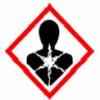
The Globally Harmonized System was developed to provide a single, consistent system to classify chemicals, labels, and safety data sheets for workers, employers, and chemical users. Under GHS, labels would include signal words, hazard and precautionary statements, and pictograms such as the one shown, used for carcinogens, respiratory sensitizers, and germ cell mutagens.
According to EPA, one the company's drivers failed to provide immediate notification to authorities following a 920-pound release of anhydrous ammonia while making a delivery to a farm.
Under an agreement signed last week, OSHA and LSU Continuing Education will work together to deliver workplace safety and health courses, specifically focusing on related hazard awareness and the recognition and benefits of an effective safety and health management system.
According to the investigation, the worker was covered by almost 240-degree asphalt released from an open valve on the transfer system due to a pressure increase that separated the transfer hose from the system.