"This study raises the question: Is there a safe level for BPA exposure, and what is that level? More studies like this, which examine the effect of BPA on humans, are critically needed to help establish prevention strategies and regulatory policies," said lead author De-Kun Li, M.D., Ph.D., of Kaiser Permanente's Division of Research in Oakland, Calif.
"These impressive young environmentalists all displayed superb thought leadership and presentation skills. Selecting the winning themes was extremely difficult, although the industry will surely be hearing more from these students in years ahead," said John Valkenburg of Adventus.
EPA said its Region 7 receives more accidental release reports for ammonia than for any other chemical. In addition to releases caused by transportation accidents, human error, and equipment failure, a number have been caused by anhydrous ammonia thefts.
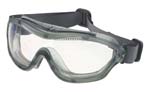
The group, consisting of representatives from 14 major vision protection suppliers, held a kickoff meeting Nov. 9 during the association's Fall Meeting.

In December 2007, EPA issued a rule requiring reductions in air toxic emissions from auto body shops that use spray application to paint cars or that use paint strippers containing a toxic substance called methylene chloride. Existing shops must comply with the rule by January 2011; new shops have to comply by 180 days after startup.
The reports include online graphs, trend information on enforcement and compliance in each state, and comparative reports. Data such as compliance monitoring activity, violations discovered, enforcement actions taken, and penalties assessed are available.

At a large trade show this week and in national radio advertisements, the British OSH agency is urging renovation contractors and workers to be aware of potential asbestos exposures and the possibility of contracting mesothelioma and other deadly illnesses.
"The new labels will carry more uniform and specific directions on restricting spray drift while giving pesticide applicators clear and workable instructions," said Steve Owens, assistant administrator for EPA's Office of Prevention, Pesticides and Toxic Substances.

According to researchers at Mount Sinai School of Medicine, thousands of residents and workers in Libby, Mont., have been exposed to asbestos-contaminated vermiculite ore for nearly a century, which they believe has led to markedly higher rates of lung disease and autoimmune disorders.

Seen by some as OSHA's much bigger brother, EPA waded into several big safety issues this fall.

NIOSH is marking a National Day of Remembrance for those workers and has a new interim director for the Office of Compensation Analysis and Support, which administers NIOSH’s duties under the act that compensates these workers for illnesses associated with their work.

Everywhere there is a cell phone, that is. First-generation lab prototypes will be demonstrated tomorrow in San Diego by the Department of Homeland Security's Science and Technology Directorate.
"Electricity moves--and can kill or injure--at the speed of light. It doesn't give you a second chance," said C. William Freeman III, OSHA's area director in Hartford, Conn.
"Steel mills remain a dangerous place to work, and it is inexcusable to fail to correct serious dangers, particularly after they've already been identified by OSHA. . . . We expect better," said OSHA Area Director Jule Hovi in Toledo, Ohio.
When authorities discover a "meth house," they decontaminate it by removing chemicals, getting rid of carpeting, cleaning walls, and airing the place out for a few days. Dr. Glenn Morrison, an associate professor of environmental engineering at Missouri University of Science and Technology, is concerned as to whether such decontamination methods are sufficient to protect future occupants from exposure to methamphetamine and other chemicals.

On Friday, the union and Chevron Philips Petroleum marked the 20th anniversary of a refinery explosion and fire in Pasadena, Texas, that killed 23 workers and injured 314 others. International VP Gary Beevers said not enough has been done since then to ensure safety at refineries.
There are potential health risks for some solvents, depending on the types of landfills in which wipes contaminated with them are disposed, said the agency, which seeks comments on its revised analysis.
One of the hazardous wastes the Utah man was accused of illegally dumping was nonylphenol, a powerful organic chemical and heavy-duty industrial cleaner that is toxic to aquatic life. The man’s actions allegedly caused a nearby wastewater treatment plant to violate permit limits for acute toxicity 22 times.
Inspections conducted over the past several months by OSHA's area office in Andover, Mass., also identified various chemical, mechanical, and electrical hazards--41 violations in all, with proposed penalties totaling $138,000.
In April, a fire at the facility sent three workers to a local hospital. The resulting inspection revealed nine alleged willful, four serious, two repeat, and two failure-to-abate violations.