The 24 alleged serious violations that resulted from a site-specific targeting program investigation included a failure to have at least two suitable gas masks available and accessible; lack of developed confined space procedures; and grinding wheel, compressed air, and electrical shock hazards.
In addition, OSHA issued the company 50 serious and two other-than-serious violations for failing to provide proper protective equipment for employees working with lead and other extremely dangerous dust and chemicals, and failing to develop or implement a hazard communication program, among other things.
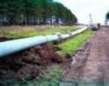
Finalizing a proposed rule to incorporate more than 40 voluntary consensus standards in federal pipeline safety regulations, PHMSA said it will not adopt the 2008 editions of NFPA 58, Liquefied Petroleum Gas Code, and NFPA 59, Utility Liquefied Petroleum Gas Plant Code.
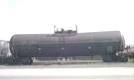
The board promised it will be balanced, including railroads, tank car owners, shippers, and others. Its goal: Deliver recommendations within two years to solve the vexing question of liability for rail toxic by inhalation hazard shipments.
The companies allegedly offered hazardous material for transportation when it was not packaged, marked, classed, described, labeled, or in condition for shipment as required by regulations.
The company received repeat citations for failing to make a reasonable estimate of employee exposure to hazardous chemicals such as hydrogen sulfide and carbon monoxide; it received willful citations for failing to implement confined space entry procedures.
According to the Department of Justice, the amount of the civil penalty is “precedent-setting” yet “appropriate in light of the unacceptable risk” created by the underground storage tanks at the defendants’ 17 gas stations in Maryland and Delaware.
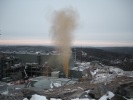
"The fines and penalties reflect the gravity and severity of the deadly conditions created by the companies managing the work at the site," said Labor Secretary Hilda Solis. "No operation and no deadline is worth cutting common sense safety procedures. Workers should not sacrifice their lives for their livelihoods."
A report released Aug. 2 by Safe Work Australia evaluates two possible approaches for using control banding to ensure safety when working with nanomaterials but admits workplaces there have little knowledge of it.
“Tank truck rollovers are considerably more dangerous when they involve hazardous materials,” said PHMSA Administrator Cynthia Quarterman. “Improved cargo tank truck driver safety will also benefit the general public that shares the highways.”
Owners and operators of natural gas and hazardous liquid pipeline facilities should have policies governing the use of personal electronic devices by certain employees, the DOT agency said Tuesday.

Recently, a model of genuine worker participation has surprisingly emerged in China.
More than 50 public meetings are in the books for this project of CDC and ATSDR about chemical exposures and public health. An action agenda is scheduled for release in December.
The purpose of the SPCC rule, which was finalized in 1973, is to establish requirements for facilities to prevent a discharge of oil into navigable waters or adjoining shorelines.
Among the wide range of dangers inspectors listed were the risk of laceration, amputation, or crushing injuries; electrical hazards; fire and explosion hazards stemming from combustible dust; improper storage of flammable liquids; and insufficient monitoring of exmployees’ exposure to hexavalent chromium.
At the specialist level, trainees are expected to don and doff a hazmat suit. For some, this can bring out anxieties that range from fear of suit entrapment to decreased mobility or visibility.
In the same way the demand for respirators challenged manufacturers after H1N1 influenza was declared a pandemic, glove and apparel orders soared once the spill began.

Many organizations contributed to the recent presentation of a training module in Shanghai for about 25 students. The goal of the new Occupational Hygiene Training Association is to take the courses to the developing world as an international certification is developed.
Two workers were burned while applying primer inside a tanker trailer. One worker died and another remains hospitalized with burns to more than 90 percent of his body. A third worker, the attendant monitoring the confined space in the event of an emergency, was blown off the tank when the vapors ignited.
According to complaints issued by EPA, Munce’s Superior and Munce’s Superior Petroleum Products of Gorham, and Ryezak Oil Co. of Rumney failed to fully prepare and maintain spill prevention, control, and countermeasure (SPCC) plans.