ACCORDING to the National Fire Protection Association, an average of five fires break out per day at our nation's health care facilities1 and more than 8,000 hospital fires occur each year. If not acted upon quickly and effectively, the results can be catastrophic.
Editor's note: Today's clean agents quench fires quickly without damaging sensitive contents of the structure, and they cause no environmental damage, says Joe Ziemba, marketing manager for engineered systems with Marinette, Wis.-based ANSUL Inc., which is part of Tyco Fire & Security. He discussed clean agents' role in fire suppression and the best applications for new, cleaner agents in this June 10, 2005, conversation with Occupational Health & Safety's editor.
Editor's note: How can a safety manager persuade both corporate management and workers to comply with NFPA 70E, the consensus standard addressing electrical safety requirements for workplaces? Read on to see how Gary McGuire solved the problem. McGuire is safety coordinator at the Newberg, Ore., mill of SP Newsprint Co. (www.spnewsprint.com), which is based in Atlanta, Ga., and produces more than 1 million tons of newsprint annually.
Editor's note: A trend to require more fire safety equipment in residences and nursing homes will reduce deaths and injuries, both among firefighters and the general public, says E. Metts Hardy, vice president/Fire Investigations for EFI Global (www.efiglobal.com), a Kingwood, Texas-based provider of engineering, fire investigation, environmental, accident reconstruction, and laboratory testing services.
Approximately 80 percent of all electrical injuries are burns that result from the electric arc flash and ignition of an employee's flammable clothing. Arc flashes cause electrical equipment to explode, resulting in an arc-plasma fireball.
WORKING with electrical systems exposes utility workers to an average of five to ten explosions of energy every day. When working with these same electrical systems at height, there is no room for error.
THE federal government finally has involved itself seriously in fire protection--a decidedly local responsibility from the days when Ben Franklin organized the first volunteer fire department. In the days since September 11, 2001
LOOK up the word "plenum" in Webster's New World Dictionary and you'll find it defined as a "space filled with matter." Look in the open-air--or plenum--spaces between floors in your office building and you're likely to find the definition holds true.
A fire can ravage a business, as one startling statistic makes clear: more than 75 percent of businesses that suffer a serious fire go out of business within three years of reopening. Businesses that prepare contingency plans, train their employees for emergency situations, and call for immediate professional help with the cleanup stand a much better chance of a solid recovery.
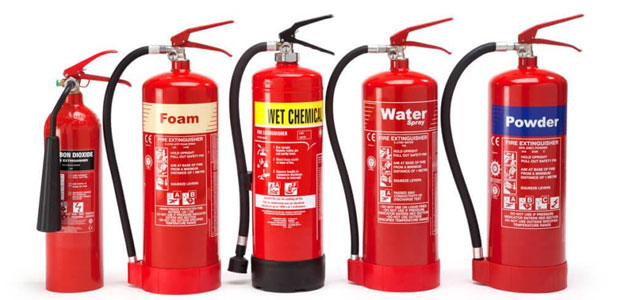
FIRE extinguishers are a common sight wherever you travel, from government buildings to businesses to restaurants.
NFPA 70E-2004, published in April of this year, is the new "how you work on it" standard in electrical safety. With the coupling of NFPA 70E's work practice standard and the "how you build it" approach of the NFPA 70 National Electric Code's (NEC) construction standard, industry now has a more complete picture of how to protect employees who are exposed to shock and arc hazards.
THE smell of scorched coffee fills the air on Monday morning. The only sound is that of high-pitched, heatedly arguing staff members, about whose responsibility it was to have shut off the pot before the weekend, as they fan the thin haze of smoke out of the break room.
AS a facility safety director or fire protection manager, you have several types of training to offer to different groups of people.
FOR almost a century, NFPA 30 has guided users of flammable and combustible liquids. From 1913 to 1957, the document was published as a model municipal ordinance. In 1957, the format was changed to a code, although the technical requirements and provisions remained the same.
IT was a Monday night last May at Las Palmitas, a restaurant in Coeur d'Alene, Idaho, when a fire broke out in its lounge filled with a crowd of 200 customers.
FOR many years, it has been recognized that turnout gear needs to be maintained in order for the firefighter to receive full benefit from the standards under which the gear was manufactured. Maintenance is required for both safety and economic reasons.
THIS article is intended to provide a brief overview of water supplies for fire protection and standpipe systems. It is not a code compliance article. For detailed requirements, check with your local authority having jurisdiction (AHJ).
ALARM systems, as the name implies, provide an alarm or warning that a problem exists. They may be signaling systems only, which require manual activation, or the more common variety that combines detection with signaling.
FIRE protection is a significant concern with which all industrial facilities must contend. Depending on the location, the facility may rely on the local fire department, or it may choose to provide its own protection in the form of an industrial fire department or brigade.