
Fireworks can be dangerous, and there are many risks to keep in mind when using them.

Summer is well under way in North America, and with the sun and fun comes a number of safety concerns to keep in mind.
Ronald R. Spadafora, 63, died as a result of a World Trade Center-related cancer and became the 178th member of the FDNY to die of WTC-related illnesses, Fire Commissioner Daniel Nigro announced.
"While the Office of State Fire Marshal has conducted many smoke alarm canvasses, we have never canvassed the entire state in one day with free smoke alarm installations," said Causey. "We want to educate as many people as possible and more importantly, provide them with smoke alarms and the resources they need to take extra precautions from home fires."
NFPA task groups and technical committees have worked during the past three years to integrate the requirements of NFPA 720 into NFPA 72. NFPA's goal is to provide smoke alarm and carbon monoxide alarm requirements in a single, comprehensive document.
"Years of drought, extreme heat, and 129 million dead trees have created a 'new normal' for our state that requires comprehensive new solutions," PG&E Corporation CEO and President Geisha Williams said.
The agenda document says during 2011-14, seafood processing workers experienced the highest injury/illness rate among all maritime workers: 6,286 injuries and illnesses per 100,000 workers, according to 2016 BLS data.
"Many of the all-time or near lows we saw in 2017 reflect a continuation of declining firefighter fatality rates in the U.S.," said Rita Fahy, NFPA's manager of fire databases and systems. "At the same time, we found some unexpected shifts in terms of when and where deaths are occurring."
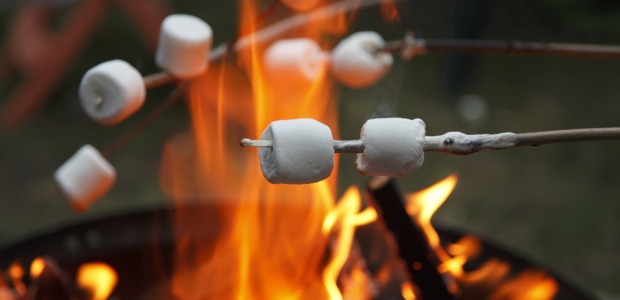
Drought conditions continue across much of California, according to CAL FIRE's Memorial Day message, which notes that wildfires can spark easily if caution is not followed.
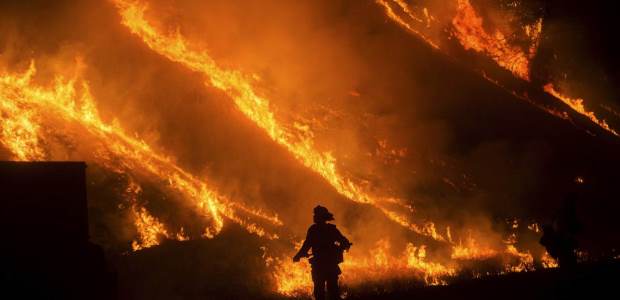
The order will double the land area actively managed through vegetation thinning, controlled fires, and reforestation from 250,000 acres to 500,000 acres.
Advocates say legislative barriers and a "general unawareness of this technology" have prevented fire sprinklers' use in new homes, something Home Fire Sprinkler Day is intended to change.
The bill as originally written would have required retrofitting older residential high-rises with sprinkler systems, but it was amended so that it instead gives incentives to condo associations if they install sprinklers.
The paper explains that not all of the particles were consistently detected, so the authors recommend that the next generation of spacecraft fire detectors must be improved and tested against smoke from relevant space materials.
The course will provide industry-specific training that includes fire safety, safety in confined spaces, and fall hazards, with an API-U certificate issued upon completion of the course.
Alaska Gov. Bill Walker issued a pair of proclamations on April 24 that declare May as both Building Safety Month and Water Safety Month in the state.
Cardiovascular disease, cancer, and chronic diseases are the first recommendation because stress is such a big factor affecting public safety workers' health, it says. Sudden cardiac events are responsible for 7 to 22 percent of on-duty deaths among police officers, 17 percent among wildland firefighters, and 11 percent among EMS workers, it says.
"Burning upholstered furniture presents a significant fire issue that demands a solution to protect both citizens and first responders," said Christian Dubay, vice president of NFPA's Engineering division. "Unfortunately, creating a test method to assist in addressing this part of the fire problem has proved quite challenging and ultimately resulted in the council's decision."
The board also will consider and possibly vote on a proposed change to Board Order 022, the CSB Recommendations Program, which is how the independent agency hopes to prevent serious accidents. Recommendations are included in CSB final reports.

Hot work should not be done where flammable vapors or combustible materials exist. Both the work and the equipment being used by the welder should be placed outside any hazardous area.

A Job Hazard Analysis is the most critical part of the job—this gives us an opportunity to go in the field with operations and review, recognize, and control hazards at the job site or in the area.