Build the processes now that will encourage maximum productivity and minimal errors, employers are told. ASSE has a webinar today to assist.
MSDs are the biggest workplace health problem in Europe, with surveys indicating the problem is growing, according to the ETUC.

I am overly attached to my computer mouse--there, I've said it. I cup, grip, push, pull, and otherwise maneuver it merrily all day long, clicking left and right, deftly flinging the cursor, and scrolling with abandon. I keep its pad clean. Sometimes, deep in thought, I think I caress it. I make this confession--providing clearly way too much information--in order to admit at the outset that I have a bias, perhaps even an unhealthy one.

Apparel, ergonomic furniture, security, and fire protection were hot at this year's event. The next A+A will take place Nov. 3-6, 2009.
WHAT can you do when you've "tried everything" technically, yet still have stubborn problems? Try a strategic leadership approach.
I have worked in the field of vision care for more than 34 years. The number one visual complaint over most of those years has been the headaches and eyestrain caused by fluorescent lighting. Somewhere along the line, someone said, "If a little bit of light is good, then a lot of light must be great!" Nothing could be further from the truth. Making the visual system work harder to compensate for the glare is never smarter.
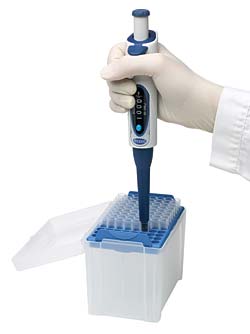
PIPETTE selection is seldom a well-thought-out decision. Rather, it has more to do with the individual preference of the person responsible for ordering or the right salesperson's being there at the right time with the lowest price. However, pipette selection is becoming more critical due to the high cost of work-related injuries and the impact the absence of a scientist can have on a research project.
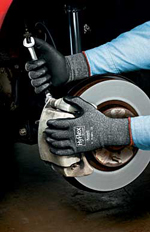
SOARING medical costs and production losses resulting from repetitive motion injuries and related musculoskeletal disorders, including carpal tunnel syndrome, are inciting safety personnel to rapidly advance their consideration of ergonomically designed products that can reduce these types of injuries. This article examines some answers to common questions related to ergonomics and hand protection products--their safety, performance, quality improvements, and cost advantages.
EVEN in this age of technology, I seem to collect and accumulate more paper than ever. I have piles of this and that on my desk and can honestly say I don?t know what treasures I have (or don't have) right at my fingertips. Disorganized is the operative word here, but I am trying really hard to recoup some semblance of order.
ON the off chance you haven't yet made your New Year's resolutions (or are already having second thoughts about the ones you did make), here is a downloadable option that could revolutionize--or, at the very least, refresh--your workdays at the computer this year.
CRUSHING, punctures, lacerations, sprains, and even aches and pains are common problems workers have with their feet. Footwear that doesn't match their hazard exposures are a leading reason for these, but overall workplace organization and work practices are often at fault.
THIS writer is of the opinion that terminal cancer is the only disease worse than depression. This article will not give (nor intends to give) the exact reason why I feel that way. However, upon reading the following, I hope the reader will discover the reason for him/herself.
PAIN is putting a strain on your bottom line. Employees who are suffering from repetitive motion injuries are not able to work at their ultimate performance level, causing decreased productivity and often incurring medical problems that can lead to disability claims.
SLIPS and falls are complex events. If you focus on just one part of the problem, such as a cracked tile or slippery floor, the risk will still exist. Instead, attack the whole problem with a systems approach that analyzes your organization and pinpoints areas needing attention.
GRIP is a safety issue in many industrial environments. During in-depth analyses conducted at more than a thousand workstations in more than 50 major manufacturing industries in Europe, grip in either wet or dry conditions was perceived as a need by workers at some 89 percent of the workstations.