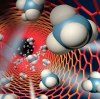
Among the 2010 winners and honorable mentions for the Alice Hamilton Award announced Wednesday is a paper published last month in Toxicology that found mice exposed to multi-walled carbon nanotubes quickly suffered lung damage.
Being able to stay in their homes and remain independent is a daily struggle for many older adults. As we age we tend to lose our flexibility, our connective tissue tightens, and we have prolonged reaction times. Problems with vision, including depth perception, all increase the likelihood of falling. When a child falls it may result in a few bumps and bruises.
A March 30 letter from the National Association of Chemical Distributors, for example, expresses concern that the proposed rule, "which will result in a negative economic impact for the chemical distribution industry, is a prelude towards a more expansive and burdensome ergonomics framework."
The list is intended to help countries prevent, record, and, if applicable, compensate for diseases caused by work.
The award for original research that prevents work-related injuries includes a $10,000 prize, and the winning paper is to be submitted to one of 14 IEA-endorsed scientific journals.
Today's public hearing about OSHA's proposed restoration of an OSHA 300 log column for recording musculoskeletal disorders allows the two sides to again stake out positions for and against any form of ergonomics regulation.

The March 4 "OSHA Listens" meeting did not lack for out-of-the-box thinking. What OSHA does with the input from ASSE President Chris Patton and others is the crucial part, of course.
Technologies have radically changed our lives, but our environments haven't kept up the same pace to ensure a healthy and productive workplace.
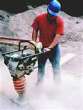
Exposure to hand and arm vibration in the workplace can range from severe and debilitating to nuisance level. Fortunately, there are simple solutions to this under-reported, under-regulated problem.
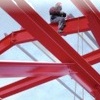
Reducing the physical demands on all workers in construction is essential.
The non-invasive device, developed especially for those with osteoarthritis, is worn against the skin and designed to give patients and physicians the ability to precisely adjust the amount of pain-relieving force applied to the knee.
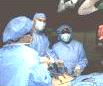
In a University of Maryland School of Medicine survey of this profession, the largest such survey to date, 87 percent of them reported experiencing discomfort.
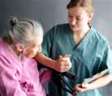
The new resource from NIOSH is sure to be needed: BLS has projected this occupation will grow faster than any other through 2016.
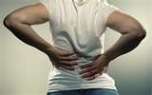
With the regulatory impact statement and economic analysis all but done, Michigan OSHA's controversial proposed ergonomics standard could reach the public hearings stage in about 90 days.
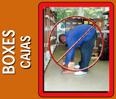
NIOSH has translated "Simple Solutions – Ergonomics for Construction Workers" into Spanish to aid employers and workers.
The association's president wrote to U.S. Sen. Al Franken, D-Minn., who sponsored S. 1788, warning that risk control approaches aren't available at this time to address all of the workers' exposures in that industry.
The Food and Drug Administration recently unveiled the first phase of its Transparency Initiative that is designed to explain agency operations, how it makes decisions, and the drug approval process.
Carol Stuart-Buttle, MS, CPE, MErgS, principal at Stuart-Buttle Ergonomics of Philadelphia, started as editor of the journal Ergonomics in Design on Jan. 1, 2010.
Executives are people first. Sounds obvious, but this is key to heightening active support for Safety and Health from your company's apex.

The H1N1 pandemic was 2009's biggest safety and health story, but OSHA also grabbed the spotlight last year with a blockbuster $87 million fine. For all of the attention paid to tower crane safety, combustible dusts, crumbling infrastructure, and a jobless recovery, the biggest story of 2000-2009 was Sept. 11, 2001.