Wal-Mart Loses Meat Cutters Bargaining Appeal
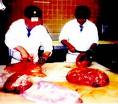
One of the actions that cemented Wal-Mart Stores Inc.'s anti-union reputation in the public's mind was its decision in February 2000 to convert many of its stores' meat departments so their employees would simply sell prepackaged meats, rather than cutting it themselves. This was significant because 10 meat department employees at Wal-Mart's Jacksonville, Texas, store had elected United Food and Commercial Workers Local 540 as their bargaining representative earlier that month. Wal-Mart won because the National Labor Relations Board agreed that, because of the conversion, the meat department had become an inappropriate bargaining unit, meaning Wal-Mart had no general duty to bargain with the UFCW. But the NLRB said Wal-Mart nevertheless must bargain with the union over the effects of the conversion on those meat department employees, and on Friday, a federal appeals court upheld both of the board's decisions.
Both the union and Wal-Mart sought relief from the U.S. Court of Appeals for the District of Columbia Circuit, with UFCW claiming the meat department unit is still appropriate and Wal-Mart claiming it has no duty to bargain over the effects of its change.
The NRLB has historically treated meat department units as presumptively appropriate, but meat departments in general use more prepackaged meats and require little or no meat cutting skills of their workers, Judge Brett M. Kavanaugh wrote for the unanimous three-judge panel. Relying now on its ordinary community-of-interest test in which cutting skill is central to the appropriateness determination, the board decided the Jacksonville unit did not meet the test because the workers do no specialized cutting. The board's precedent establishes that when a plant closes, the employer has a duty to bargain over the effects of the closing, and the board here found that the Jacksonville department's conversation was analogous to a closing because it eliminated the bargaining unit. The judges agreed the board reasonably applied its precedents in finding Wal-Mart committed an unfair labor practice by failing to engage in effects bargaining with UFCW, so they denied Wal-Mart's petition for review.