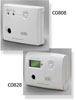
Report Helps in Placing Buildings' CO Detectors
A new report prepared by NFPA's Fire Protection Research Foundation reviews the technical literature about carbon monoxide deaths, whether related to fires or not, to fill a knowledge gap about how CO is generated and moves inside buildings. The report will help system designers and others decide where to place CO detectors in structures.
NFPA posted the 37-page report, "Development of a Technical Basis For Carbon Monoxide Detector Siting Research Project," at www.nfpa.org/assets/files//PDF/Research/Carbon_MonoxideDetectorSpacing.pdf.
Honeywell Life Safety and Tyco International were sponsors of the report, which was prepared by two Hughes Associates Inc. (Baltimore, Md.) representatives with help from a technical panel of alarm company, fire department, academic, and federal experts. The report was undertaken after the NFPA Technical Committee on Carbon Monoxide Protection expanded the scope of NFPA 720 this year to cover all occupancies, not just dwelling units, and the committee realized this gap in technical knowledge should be filled.
The report says the literature shows there are about 500 CO poisoning deaths annually in the United States and 15,000 individuals treated each year in the United States for CO poisoning. Deaths and injuries have been falling as motor vehicle emissions controls and combustion devices have improved, it says.
It recommends placing a CO detector in every room containing a combustion device, and one IAQ CO detector in each HVAC zone of buildings with continuously operating HVAC ventilation systems. Buildings with HVAC systems that do not continuously operate should have one IAQ CO monitor per floor, with one detector for each area defined by a closed door if normally closed doors divide a floor area, it says, adding that data is "mostly lacking" for large-floor-area spaces with a minimum of closed doors.