
With the right assessment, training, management support, and processes in place, you can proactively identify and eliminate ergonomic issues before they result in debilitating injuries.
Twenty-two companies, including four multiple winners, won in the magazine's eighth annual New Product of the Year contest. Winners will receive their trophies at the 2016 National Safety Congress & Expo in Anaheim.

The pre-conference program identifies 10 technical sessions as "hot topics" for this year—and they look very promising.
The 2016 International Annual Meeting of the Human Factors and Ergonomics Society is taking place next month in Washington, D.C., and features an intriguing and timely technical program, with 125 concurrent sessions.

OSHA has required employers to develop a Chemical Hygiene Plan that addresses labeling as well as all other aspects of the Laboratory standard.
Ergonomics in the lab can help reduce fatigue and injury, and result in more productivity.

ANA defines a Culture of Safety as one in which a health care organization's leaders, managers, and workers are committed to core values and behaviors that emphasize safety over competing goals, and where openness and mutual respect are present when discussing safety concerns and solutions without shifting to individual blame. It also is marked by a learning environment; transparency and accountability; and reliable teams.
Leaders who think in terms of "repeat offenders" are unlikely to consider contributors other than the ill-intended motivations or habits of those injured. Besides not solving the problem, this approach often backfires.
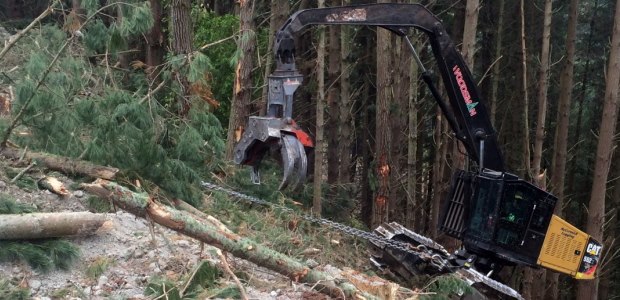
Employers intending to use winch- or cable-assisted systems for steep slope logging must ensure that the harvesting machine was specified by its manufacturer for operation on slopes of more than 40 or 50 percent or seek a research variance before using the harvesting machine above its slope limit with a tethered system.
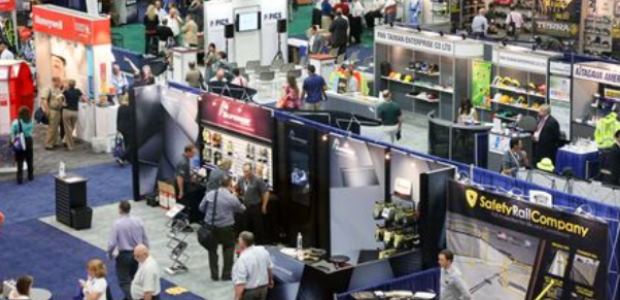
The best and brightest 2016 shows include NFMT 2016, which takes place in March 2016 in Baltimore, followed by AIHce 2016, ASSE's Safety 2016, NFPA's Conference & Expo VPPPA's national conference, WEFTEC 2016, and the 2016 National Safety Congress & Expo.

Industrial use of exoskeletons is just starting to be explored.
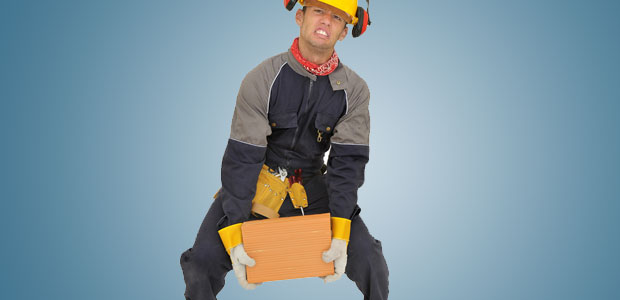
Overexertion involving outside sources ranked first among the leading causes of disabling injury, according to the 2016 Liberty Mutual Workplace Safety Index.
OSHA has cited the employer for one other-than-serious violation for not recording 26 instances of work-related injuries and illnesses on the 300 log.

Slips, trips, and falls are an everyday risk at hospitals and comprise one of the top accident categories.

One Congress event will be focused on the construction industry: "Age-Appropriate Workplace Design in the Construction Industry." And ergonomic workplace design will be highlighted in Hall 10 at the trade fair with the heading "Health at Work."
Industries where Australian workers are exposed to vibration range from mining and construction to manufacturing, agriculture, forestry, fisheries, trades, transport, and utilities; the cost amounted to $134 million in workers' compensation payments during the most recent 14 years.
A Delaware poultry processing plant has been warned by OSHA.

Brief job task simulations are often not particularly effective for evaluating an individual’s ability to perform a job that has a significant extended energy expenditure requirement.

Tablets are unlike traditional PCs because they are used in different locations, with different postures, while doing other things. Because of this, the ergonomics with a tablet become far more challenging.
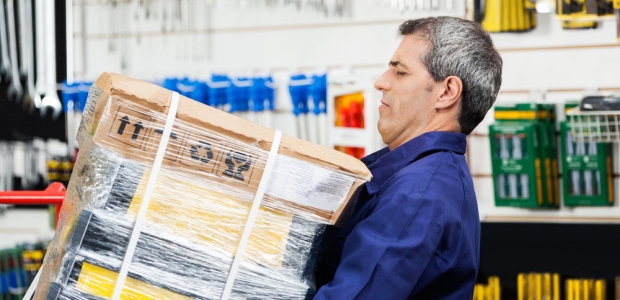
There is no question that musculoskeletal disorders continue to be a leading cause of lost-time injuries among U.S. workers.