A Call for Leadership
Sometimes, employees learn what not to do from their safety management.
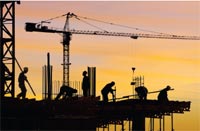 With springtime comes the surge of construction
activity—an exciting time,
and possibly a dangerous time, too. Lots
of new sites begin work as soon as the
severe weather breaks. New crews, different trades, and
subcontractors work in close proximity with seasoned
workers, temporary employees, and even interns.Multicultural
and -lingual sites are common.In such settings,
how do you know who is at risk for injury? As part of
each job, is safety discussed in detail? Are you and your
managers leading safety effectively?
With springtime comes the surge of construction
activity—an exciting time,
and possibly a dangerous time, too. Lots
of new sites begin work as soon as the
severe weather breaks. New crews, different trades, and
subcontractors work in close proximity with seasoned
workers, temporary employees, and even interns.Multicultural
and -lingual sites are common.In such settings,
how do you know who is at risk for injury? As part of
each job, is safety discussed in detail? Are you and your
managers leading safety effectively?
It is not unusual for workers to get in a hurry at the
end of the day (or at the end of the job or the season, for
that matter) and throw PPE into a bucket, bin, or even
on the windshield of the work truck until needed the
next time.More than once during my career, I have seen
dirty,worn respirators; damaged safety glasses; or filthy
ear plugs that I have no doubt an employee would pull
out and wear if required to without a second thought.
It’s the same with shortcuts of other types:working with
damaged equipment (a missing back-up alarm or not
wearing a fall protection harness that is attached to an
anchorage, for example) or trying to shave some time
by omitting safeguards “just this once.” Then, an accident
occurs that could have been prevented. The safety
management question is simple:Where is the management
leadership in safety?
As you review your policies and safety supervision,
ask what efforts your company makes to ensure each
employee who needs training or PPE has it and wears
or cares for it properly. Again, the more troubling
question is, where is the management leadership in
this quagmire? Are your leaders really leading your
employees, or are they bringing up the rear of the
pack, “hoping for the best”? We have all seen the invisible
site safety manager—the one no one knows by
name and is rarely seen. If your employees do not
know who the safety staff are (if not by name, at least
title), your company has a safety management problem
on your construction sites.
Clues Are Easy to See
While it is so easy to blame the safety manager, how
about his/her upper management in the corporate
suite shouldering some responsibility, too? Safety
managers often feel their hands are tied by production
and scheduling. The important thing to remember is
that job sites are simple reflections of any company’s
real attitude toward safety.
When any safety professional audits a construction
site, the tone of the inspection is set quickly by basics
of site housekeeping, attention to following safety policy/
procedures set by the company, and follow-up. If
the manager on site is interested in safety efforts, the
site and employees will have a more positive appearance
and show interest in getting the job done safely!
Employees will be able to explain safety training without
being spoon-fed, and the measures needed for critical
areas of fire protection, exits, high-hazard programs
such as confined spaces and fall protection are
understood by everyone.
It is a very hard thing to self-evaluate for our supervisors
and managers, and no program will be perfect.
However, as tough as it is to see our own flaws in safety
programs, such efforts may save a life. One tool that is
very useful is to provide a “program assessment” report
that covers the areas/programs in place and highlights
those needing improvement.
Traditionally, safety professionals are overworked,
highly stressed loners who try diligently to stay one step
ahead of disaster, at best.We think and perceive differently
from other managers because our goal is different
and more important.We need more manpower to get
the job done, more money for equipment, and more
time for professional development to understand everything
needed from us.We are supervising the managers
and, through education and awareness, spreading safety
to the most changing and most transient of work
sites: construction.
This article originally appeared in the August 2008 issue of Occupational Health & Safety.