Our Magnificent Workplace Obsession
What you do not have on hand is important, too. Keep contact lists of vendors for those out-of-the-ordinary tasks you assign.
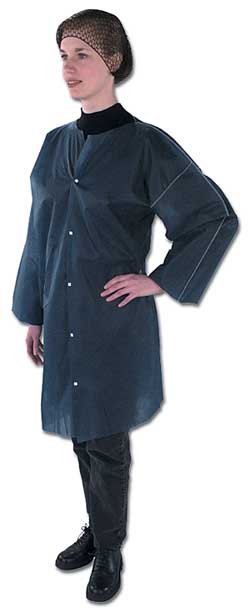 UNLIKE the days of long ago, in our modern workplaces the armor of Personal Protective Apparel (PPA) awaits almost any situation from the extreme to the daily grind.
The range of apparel needs and uses makes for a long list: Dust, splash protection, fire approach, or hazmat; pesticides, explosives or demolition work; high heat protection, cold stress protection, wind or chemical barrier protection; cleanroom suits, foodservice/sanitation apparel, medical/surgical/BBP protection; barrier protection; rescue, security, emergency response, and crime scene investigation; even fire-retardant items uniquely suited for refinery work. Chances are if you have a need for a particular protective apparel item, it exists and can be shipped to you, pronto.
Some years ago in an office building, I watched in amazement as a slimy, Tarzan-like creature oozed down the hallway wrapped in a cheerful floral vinyl tablecloth. He was being escorted by maintenance, with a housekeeper chasing his tracks with a mop and fussing every step of the way. There was no injury, but a contractor elevator technician had become fully covered in oil during a repair and was being taken to shower and change so he could travel safely. His first change was into the loincloth he fashioned from the safety shower. Later I happened to see the same fellow, who was then clean, barefoot, and wearing two long black trash bags tied at the shoulders until something better could be found.
It was an office building with a contractor staff exposure . . . no one had considered there would be a need to have PPA available. And until that moment, none had been needed. Would your employees know what to do? (While this example is lighthearted instead of horrifying, it shows why we need to plan ahead for the unexpected.)
Keep These Considerations in Mind
Take, for example, the use and availability of personal protective apparel for your workforce. Do you have the needed items on hand and in the correct sizes? Has a realistic task analysis been done for every position that specifically addressed protective apparel for the employees?
A second important consideration is what you do not have on hand: Do you have immediately available contact lists of vendors so you can obtain something with a blindingly fast turnaround time for those tasks you assign that may require something out of the ordinary?
A quick review of many standards will indicate the need for some specialty protective apparel. This is true not only for injury/illness prevention, but also to prevent product contamination. The list of needed PPA in industry and construction applications is extensive, with many crossover areas. In today's workforce, it is simply good safety judgment to have needed apparel articles on hand in multiple locations and clearly identified for use. No one wants to search for an item when in the midst of a high-stress time.
Consider the following points as you assess your PPA needs:
* Affordable, lightweight, breathable materials make wearing PPA more comfortable for workers.
* The low costs of disposables have reduced budget stress.
* Long storage life makes planning easier, too, by setting up articles in a variety of sizes in order to have them ready for an emergency need.
* If you have eyewash units, safety showers, or other protective measures, chances are you may need additional PPA for emergency use.
* Toxic or unknown health hazards arise in many situations, such as a homicide investigation or sampling for a cleanup operation.
* Read your MSDS sheets carefully for needed PPA items or references.
Consistency of use requires you to train workers on when and how to wear the PPA correctly. Discuss tasks with employees to ensure they are using the correct items for the job hazards. Also:
* Try before you buy. Ask for samples of items and make sure an item suits your task(s) being done before buying in bulk.
* Keep those contacts! Pick up samples from various vendors by phone, by written request, or by picking up show samples at the big safety or industrial hygiene shows. Sometimes the newer items have added benefits and some cost breaks, too.
* When dealing with toxic material exposures or splash protection, make sure the items used are appropriate for the applications.
* Bloodborne pathogens protection may be needed in any workplace, not just health care operations.
* Emergency situations to consider might include flood cleanup or other spills where there is some potential for employee contact.
Just in case: (my favorite category!) This is when you advise employees to use due caution for potential unknown hazards of rare work tasks, processes, or cleanups. Your employee training must emphasize going the extra mile in self-protection and wearing needed PPA accordingly.
Finding the Right Balance
"Obsessive. . . ." One manager actually growled this word while saying, "Don't obsess on this item. I don't have the patience for it today."
How do you as the safety professional promote wearing personal protective apparel where it's needed without sounding "preachy" or--the dreaded term--"obsessive"?
How do you balance "actual need" with "potential" for the upper managers and bean counters? How do you prepare your workforce for what might (or might never) happen? This is the true heart of the safety program: Consistency and actual need. As the safety professional, you have to give examples and explain the real-world potential for your facility. It is not a contest or an argument. This is about being ready when needed to meet any workplace challenge squarely and quickly. Your training must showcase example after example of what happens when the appropriate protective apparel is not used or is used correctly.
In the safety arena, few items are true luxuries. That being said, protective apparel is one of the most overlooked and understocked areas, in my opinion. Few of us ever think we will need PPA--or if we do, we have only a few select items on hand at any given time.
We tend to rely on employees not needing or requesting PPA, or we do not comprehensively assess tasks and have replenishments on hand. Then, when a crisis happens and we are caught short on supplies, the need is reassessed. Too little, and way too late!
Checklist for Protective Apparel
Wearing appropriate protective apparel is essential to the safe performance of many tasks, from electrical work to phlebotomy, commercial fishing to firefighting, police and security work to construction. This is essential protection in the hierarchy of controls along with PPE of various kinds, such as hard hats, eyewear, hearing protection, and protective footwear.
This checklist can help you identify and address common workplace hazards; it is not a substitute for a comprehensive safety program.
* Have you assessed the workplace to identify hazards that may require the use of protective apparel and accessories?
* If hazards or the likelihood of hazards are found, have you selected and instructed affected employees to use these products when exposed to the hazards?
* Have the employees been trained on apparel that is necessary for their tasks and how to maintain it properly?
* Are protective gloves, aprons, shields or other means provided and required where employees could be cut or where there is reasonably anticipated exposure to corrosive liquids, chemicals, blood, or other potentially infectious materials?
* Are workers encouraged to wear proper clothing for cold, wet, and windy conditions--including layers so they can adjust to changing conditions?
* Are there appropriate procedures in place for disposing of or decontaminating PPE and apparel that is contaminated with, or reasonably anticipated to be contaminated with, blood or other potentially infectious materials?
This article appeared in the May 2005 issue of Occupational Health & Safety.
]
This article originally appeared in the May 2005 issue of Occupational Health & Safety.