Using a Solutions Approach
Business solutions provide opportunities to improve a hand protection program.
- By Mike Kimberley
- Jun 01, 2004
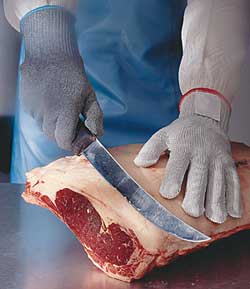 WITH more than 25 percent of all workplace accidents involving hand and finger injuries (and each disabling hand injury costing as much as $26,000), many companies and organizations are placing a higher priority on identifying the critical issues associated with the workplace environment.
Preventing injuries can have an immediate impact on a company's costs by reducing its medical and indemnity costs. Reducing or eliminating injuries will provide other benefits, such as decreased downtime, process efficiency improvements, and better employee morale.
The Cost Challenge
Thirty years ago, accidents and their related expenses were considered part of the cost of doing business. Although companies prided themselves on keeping hand and finger injuries to a minimum, these types of accidents were considered inevitable.
Companies and businesses today, however, have a zero tolerance for accidents and their related costs. As a result, safety managers are being charged with the task of implementing the safety program they need to prevent and/or eliminate employee injuries. At the same time, companies in every industry are looking for effective ways to reduce their cost of doing business by lowering their cost per unit. Every function within an organization has the task of finding business solutions that could lead to cost-saving opportunities.
Historically, this task has involved finding alternative products at a lower cost. In the future, however, organizations must look "outside the box" to find effective ways of reducing costs, while at the same time providing their employees with a safety program that protects them from the environment in which they work. This is especially important because increased automation and improved equipment are likely to continue to change the environment to which workers are exposed and, in turn, the potential risks they may face.
Companies are finding that viewing safety as a revenue provider has the potential to positively affect their bottom line. If they can significantly reduce or even eliminate the medical and indemnity costs--and the downtime--associated with on-the-job injuries, they could increase their bottom-line profits.
A Solutions Approach
Companies in various industries are discovering that they can benefit financially while keeping their employees safe by taking a solutions approach to hand protection and other personal protective equipment.
A safety solutions approach is more than looking at a specific product for a specific application. It involves identifying critical issues in the process, analyzing the applications and climate to which the worker is exposed, reviewing safety program procedures, and creating a solutions-oriented approach that will result in the most ideal, cost-effective safety program.
A solutions approach considers the total cost of use, which includes both direct costs--such as the cost of the product and the cost of injury--and indirect costs, including lost productivity and administrative burden. Identifying the challenges that businesses face today is the first step in applying a solutions approach. This involves analyzing the process and environment in which employees must work. What critical factors are involved? What process inefficiencies exist, and how do they affect safety and productivity?
Do opportunities exist to improve worker safety and efficiencies that will have a direct impact on productivity and, in turn, lower the company's cost per unit? What type of education and training can be provided to increase employee awareness? These are just a few of the questions that need to be considered when analyzing the workplace environment.
Conducting an in-depth analysis of the safety program may lead to other opportunities that can positively influence a company's bottom line. This process may identify best practices that can be implemented throughout the facility and among multiple locations. Some companies, for instance, have learned they can exert better control over their hand protection program by using automatic dispensing equipment. In some organizations, this type of change has resulted in tighter controls that have reduced product usage by as much as 50 percent. Better control, in turn, has the potential to lead to a reduction in the number of purchase orders required to maintain the proper inventory levels.
This benefit is an indirect cost that can positively affect the bottom line. Implementing a more stringent control program also can help reduce the chances of misapplication and the associated potential for injury.
Companies also may benefit from the ability to standardize their hand protection program and PPE, which can result in financial advantages associated with purchasing all of their products and PPE from a single provider. If, for example, an organization were using 50 different types of products in the past, it may be able to reduce this number to 30 while still meeting its safety objectives. This decrease will lead to an inventory and stock keeping unit (SKU) reduction, while potentially reducing waste.
Waste in an organization is not limited to product alone, but also may have a negative impact on productivity and time management. How much downtime, for example, is associated with an employee changing out his or her hand protection product multiple times during the day? Identifying areas of waste, whether they are related to product or time, is a critical factor in analyzing a company's program. Recycling is another solution that has the potential to provide organizations with cost-saving opportunities.
Various glove manufacturers offer these types of analysis services. Programs of this nature not only draw upon the expertise of hand protection specialists, but also include experts from the field who can make specific recommendations for potential workplace improvements. The programs are set up so they include measurable, quantifiable results that can be documented year after year to verify the program's success.
Summary
Companies today are placing an even greater emphasis on keeping all recordable employee injuries to a minimum. A reduction in hand and finger injuries, along with their associated medical and indemnity costs, can have a positive impact on the company's bottom line.
Safety actually can provide revenue when the safety program extends beyond the confines of specific product applications. Conducting a careful and complete analysis of all of the critical issues in a company's production process and the procedures in its safety program will allow the organization to identify opportunities for cutting costs while enhancing worker comfort and safety.
Identifying business solutions--and not just product applications--will provide organizations with additional cost saving opportunities. Tighter controls, standardization, SKU reduction, productivity improvements, and recycling are just a few of the potential solutions that can be applied.
Partnering with a reputable glove manufacturer that offers a critical safety program analysis has the potential to provide numerous, long-term advantages. A business solutions approach can provide potential productivity improvements, injury reductions, standardization of best practices, and SKU reductions, all of which result in a safer work environment.
This article originally appeared in the June 2004 issue of Occupational Health & Safety.